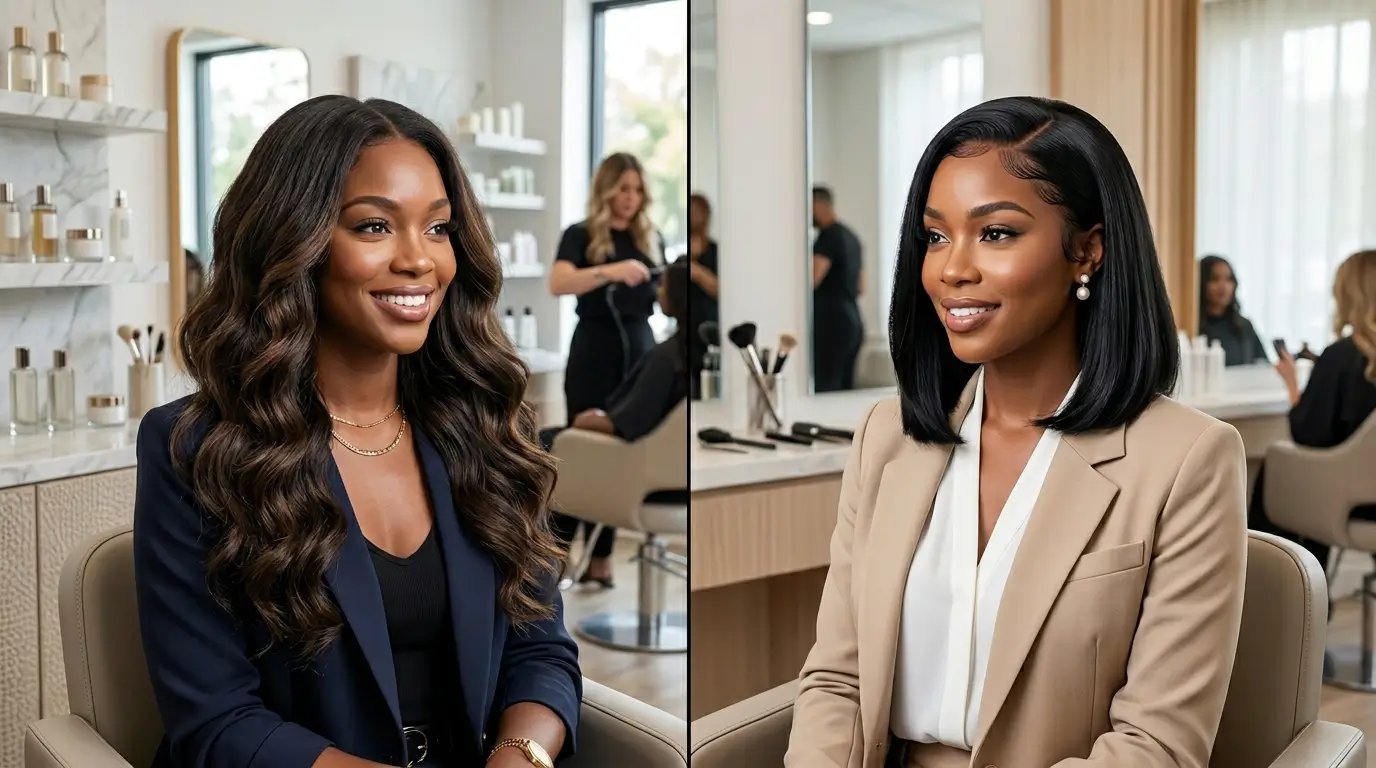
Imagine two friends preparing for a special event. One chooses a stylish wig to completely transform her appearance within minutes, while the other opts for a weave to add length and volume to her natural hair.
Although both methods enhance beauty and confidence, they are very different in how they are applied, maintained, and used. This real-life situation highlights the importance of understanding the difference between weave and wig.
The difference between weave and wig is often misunderstood because both are popular hair enhancement options.
Learning the difference between weave and wig helps people choose the right solution for their lifestyle, budget, and styling goals.
Whether you are a beauty enthusiast, hairstylist, or beginner, understanding the difference between weave and wig can save time, money, and effort while improving your overall hair experience.
Meaning of Weave
A weave is a hair extension technique in which natural or synthetic hair is sewn, glued, or bonded into a person’s natural hair to add length, volume, or style.
Meaning of Wig
A wig is a complete hair covering made from natural or synthetic hair that is worn over the scalp to change appearance or cover hair loss.
Key Difference Between Weave and Wig
The primary difference is that a weave is attached directly to a person’s natural hair, while a wig is a removable hairpiece worn over the head.
A weave becomes part of the hairstyle for weeks or months, whereas a wig can be removed and reinstalled whenever desired.
Why Is Their Difference Necessary to Know for Learners and Experts?
Understanding the difference between weave and wig is important because these hair solutions serve different purposes in modern society. Beauty professionals need accurate knowledge to recommend suitable options to clients.
Learners and consumers benefit from knowing the advantages, disadvantages, maintenance requirements, and costs associated with each method.
In today’s fashion and beauty industry, wigs and weaves contribute significantly to personal expression, confidence building, and cultural identity.
Hair replacement solutions are also important for individuals experiencing medical hair loss. Therefore, understanding their differences helps people make informed and practical decisions.
Pronunciation
Weave
US Pronunciation: /wiːv/
UK Pronunciation: /wiːv/
Wig
US Pronunciation: /wɪɡ/
UK Pronunciation: /wɪɡ/
Linking Hook
Now that we understand what each term means and why their distinction matters, let’s explore the detailed difference between weave and wig through practical comparisons, examples, and real-world applicatio
Difference Between Weave and Wig
The following points explain the difference between weave and wig in a simple and practical way.
1. Method of Attachment
Weave
A weave is attached directly to natural hair through sewing, bonding, or other techniques.
Example 1: A stylist sews hair extensions into braided natural hair.
Example 2: Hair tracks are bonded to existing hair using adhesive.
Wig
A wig is worn over the scalp and can be removed whenever desired.
Example 1: A person wears a lace-front wig for a wedding.
Example 2: Someone removes their wig before going to bed.
2. Installation Time
Weave
Installing a weave usually requires professional assistance and takes several hours.
Example 1: A full sew-in weave may take three hours.
Example 2: Complex styles can require an entire salon visit.
Wig
Most wigs can be worn within a few minutes.
Example 1: A ready-to-wear wig is put on before work.
Example 2: A costume wig is worn for a party in minutes.
3. Removal Process
Weave
Removing a weave often requires careful professional handling.
Example 1: Sewn extensions must be unstitched.
Example 2: Bonded extensions need adhesive removal products.
Wig
A wig can be removed quickly and easily.
Example 1: A user removes it before sleeping.
Example 2: A person changes wigs between events.
4. Hair Protection
Weave
A weave can protect natural hair when installed correctly.
Example 1: Hair remains braided underneath.
Example 2: Reduced daily styling may prevent breakage.
Wig
A wig offers complete coverage of natural hair.
Example 1: Hair is protected from weather exposure.
Example 2: Frequent heat styling of natural hair becomes unnecessary.
5. Styling Flexibility
Weave
A weave generally remains attached and limits quick style changes.
Example 1: The same hairstyle is worn for weeks.
Example 2: Major changes require salon visits.
Wig
A wig allows instant hairstyle changes.
Example 1: Long hair today and short hair tomorrow.
Example 2: Different colors can be worn without dyeing natural hair.
6. Maintenance Requirements
Weave
Weaves require regular scalp and extension care.
Example 1: Cleaning between braids can be difficult.
Example 2: Salon maintenance may be needed every few weeks.
Wig
Wigs are maintained separately from natural hair.
Example 1: The wig is washed independently.
Example 2: Storage on a wig stand helps preserve shape.
7. Cost Over Time
Weave
Weaves may involve repeated installation costs.
Example 1: Professional appointments increase expenses.
Example 2: Maintenance sessions add to the budget.
Wig
A wig may have a higher initial cost but can be reused.
Example 1: A quality human-hair wig lasts years.
Example 2: One wig can serve multiple occasions.
8. Comfort Level
Weave
Many people find weaves comfortable after installation.
Example 1: It feels more natural during daily activities.
Example 2: There is no need to remove it nightly.
Wig
Comfort depends on fit and material.
Example 1: Poorly fitted wigs may feel tight.
Example 2: Lightweight wigs are often comfortable for long wear.
9. Suitability for Hair Loss
Weave
A weave requires enough natural hair for attachment.
Example 1: Hair must support the installation process.
Example 2: Severe hair loss may limit suitability.
Wig
A wig is ideal for people with little or no hair.
Example 1: Cancer patients often use wigs.
Example 2: Individuals with alopecia may prefer wigs.
10. Longevity
Weave
A weave typically remains installed for several weeks.
Example 1: A sew-in may last six to eight weeks.
Example 2: Proper care extends its lifespan.
Wig
A wig can last months or years depending on quality.
Example 1: Human-hair wigs can be reused repeatedly.
Example 2: Synthetic wigs may last many months with proper care.
Nature and Behaviour of Both
A weave becomes integrated with natural hair and functions as part of the hairstyle.
It is generally semi-permanent, requires maintenance, and provides a natural-looking enhancement. People often choose weaves for long-term styling solutions.
Nature and Behaviour of a Wig
A wig is independent of natural hair and offers complete flexibility. It can be removed, replaced, and restyled easily. People often choose wigs when they want convenience, variety, or coverage for hair loss.
Why Are People Confused About Their Use?
Many people confuse weaves and wigs because both improve hair length, volume, and appearance. Social media, advertisements, and casual conversations sometimes use the terms interchangeably.
Additionally, modern wigs and weaves can look very similar, making it difficult for beginners to recognize the difference. Since both are available in human hair and synthetic hair versions, confusion becomes even more common.
Difference and Similarity Table
| Feature | Weave | Wig | Similarity |
| Attachment | Attached to natural hair | Worn over scalp | Both enhance appearance |
| Removal | Semi-permanent | Easily removable | Both can be replaced |
| Installation | Usually professional | Often self-installed | Both require proper fitting |
| Styling | Long-term | Flexible | Both offer styling options |
| Maintenance | Scalp and extension care | Separate wig care | Both require cleaning |
| Hair Loss Use | Limited | Excellent | Both can improve confidence |
| Cost | Installation costs recur | Reusable investment | Both vary in price |
| Comfort | Attached continuously | Depends on fit | Both can be comfortable |
| Longevity | Weeks | Months or years | Both can last with care |
| Materials | Human or synthetic hair | Human or synthetic hair | Both use similar materials |
Which Is Better in What Situation?
A weave is often the better choice for people who want a hairstyle that stays in place for several weeks without daily removal.
It works well for individuals who have healthy natural hair and want added length, volume, or texture while maintaining a natural appearance. A weave is also suitable for busy professionals who prefer a long-term styling solution.
Since it becomes part of the natural hairstyle, it can feel secure during exercise and everyday activities. People who enjoy a consistent look for an extended period often find a weave to be the most practical option.
When a Wig Is Better
A wig is generally the better choice for people who enjoy changing hairstyles frequently. It is ideal for individuals experiencing hair loss, those protecting their natural hair, or anyone who wants maximum styling flexibility.
Wigs allow users to switch between colors, lengths, and textures without altering their natural hair.
They are also convenient for special occasions, theatrical performances, and fashion experiments.
Because wigs can be removed and replaced easily, they provide freedom and convenience that many users appreciate.
How the Keywords Are Used in Metaphors and Similes
The word weave is often used metaphorically to describe combining different elements into a unified whole.
Examples:
- She wove her experiences into a powerful life story.
- The author weaved history and fiction together beautifully.
- The community wove a network of support around the family.
Weave in Similes
- Her ideas flowed together like threads woven into a tapestry.
- The story connected events like a carefully woven blanket.
Wig in Metaphors
The word wig is sometimes used metaphorically to represent disguise, transformation, or a hidden identity.
Examples:
- His confidence was a wig covering deep insecurity.
- The company’s new image acted like a wig over old problems.
Wig in Similes
- She changed personalities like someone changing a wig.
- The disguise fit him like a perfectly styled wig.
Connotative Meaning of Both Keywords
Weave
Positive Connotations
- Creativity
- Beauty
- Craftsmanship
- Unity
Examples:
- The artist weaved cultures together through music.
- A beautiful weave enhanced her confidence.
Negative Connotations
- Artificial appearance when poorly installed
- Complexity
Examples:
- The poorly maintained weave looked unnatural.
- The weave installation became difficult to manage.
Neutral Connotations
- A method of hair enhancement
Example:
- She scheduled a weave appointment for next week.
Wig
Positive Connotations
- Transformation
- Confidence
- Flexibility
Examples:
- The wig helped her regain self-esteem.
- A new wig gave her a fresh look.
Negative Connotations
- Disguise
- Artificiality
Examples:
- Some people mistakenly view wigs as fake.
- The cheap wig appeared unrealistic.
Neutral Connotations
- A removable hairpiece
Example:
- He purchased a wig for a theater performance.
Idioms or Expressions Related to the Words
There are no widely recognized English idioms specifically built around “weave” or “wig,” but related expressions exist.
Expressions with Weave
“Weave a Tale”
Meaning: To create or tell a story.
Example:
The novelist wove a tale of adventure and mystery.
“Weave Together”
Meaning: To combine different things into one whole.
Example:
The speaker wove together facts and personal experiences.
Expressions with Wig
“Bigwig”
Meaning: An important or influential person.
Example:
Several company bigwigs attended the meeting.
“Get Wigged Out” (Informal)
Meaning: To become nervous, stressed, or frightened.
Example:
He got wigged out before the final examination.
Works in Literature Featuring the Keywords
Weave
- The Weaveworld – Fantasy – Clive Barker – 1987
- The Golden Loom – Historical Fiction – Judith Arnopp – 2020
- A Single Thread – Historical Fiction – Tracy Chevalier – 2019
Wig
- The Wig in the Window – Children’s Mystery – Kristen Kittscher – 2013
- The White Wig of Sir Archibald – Children’s Fiction – Jack Bechdolt – 1920
Movies Related to Weave
- Weaving Women – Documentary – India – 2010
- The Weaving of a Dream – Documentary – United States – 2015
Movies Related to Wig
- Wig – Documentary – United States – 2019
- The Wig – Horror Film – South Korea – 2005
Frequently Asked Questions
1. What is the main difference between weave and wig?
A weave is attached to natural hair, while a wig is worn over the scalp and can be removed easily.
2. Which lasts longer, a weave or a wig?
A weave typically stays installed for several weeks, while a quality wig can be reused for months or years.
3. Is a weave more natural-looking than a wig?
Both can look natural when properly installed and maintained.
4. Which is better for hair loss?
A wig is generally better because it does not require natural hair for attachment.
5. Which option requires less maintenance?
Many people find wigs easier to maintain because they can be cleaned separately from natural hair.
How Both Are Useful for Society and Surroundings
Weaves and wigs contribute positively to society by supporting personal confidence, self-expression, and cultural traditions.
They provide styling options for people from different backgrounds and lifestyles. Wigs are especially valuable for individuals facing medical hair loss due to treatments or health conditions
. Both products also support large beauty and fashion industries, creating employment opportunities for hairstylists, manufacturers, designers, and retailers.
Through innovation and creativity, they help people express their identity while promoting inclusivity and confidence.
Final Words for Both
Weave
A weave offers a long-lasting and natural-looking way to enhance hair. It is ideal for people seeking stability, volume, and extended wear.
Wig
A wig provides flexibility, convenience, and instant transformation. It is particularly beneficial for people who enjoy variety or need a practical solution for hair loss.
Conclusion
Understanding the difference between weave and wig helps people make informed choices about their hair styling needs.
Although both enhance appearance and confidence, they differ significantly in attachment methods, maintenance requirements, flexibility, and suitability for various situations.
A weave works best for those seeking a semi-permanent hairstyle that blends naturally with existing hair, while a wig offers unmatched convenience and versatility. Both options have important roles in fashion, beauty, and personal identity.
By learning their unique characteristics, advantages, and limitations, individuals can select the solution that best matches their lifestyle, budget, and styling goals. Ultimately, neither option is universally better; the right choice depends on personal preferences and specific circumstances.

Sophia Bennett is a content researcher and editor at Compadiff, where she specializes in creating clear and engaging comparison articles. Her work focuses on explaining differences in health, lifestyle, education, and everyday topics in a way that is easy for readers to understand.