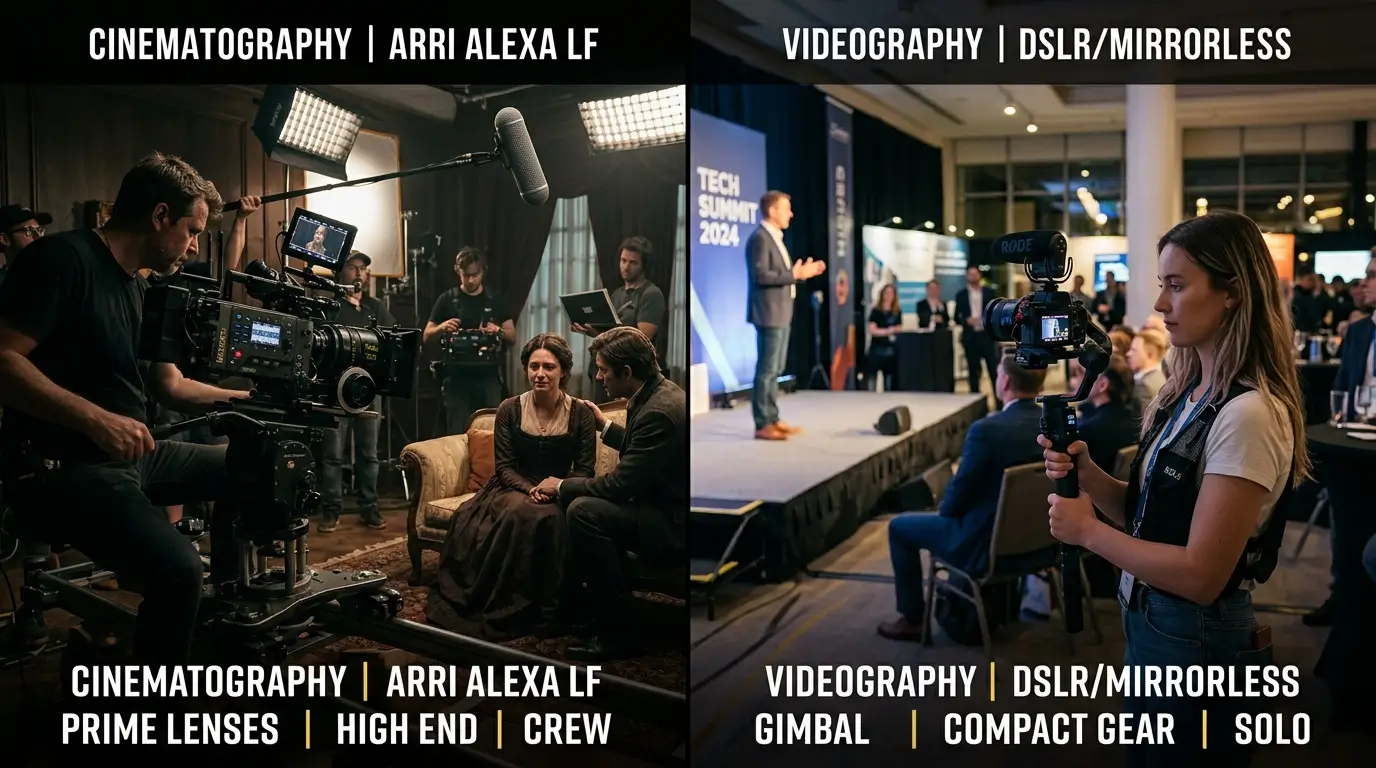
The difference between cinematography and videography lies in art, purpose, and storytelling style.
Cinematography is about creating emotion driven visual stories, while videography focuses on recording events in a direct and factual way.
Understanding the difference between cinematography and videography helps learners choose the right creative path.
Professionals also rely on this knowledge to deliver better results in media production. The difference between cinematography and videography is important in film, weddings, documentaries, and digital content creation.
Difference Between the Both
Cinematography is the art of visual storytelling used in films, dramas, and commercials, while videography is the process of capturing real life events such as weddings, conferences, and news coverage.
Why Their Difference is Important
Knowing the difference helps students, filmmakers, and content creators choose the correct tools, techniques, and career paths. In society, both play a key role in entertainment, education, journalism, and digital marketing.
Pronunciation of Both
- Cinematography:
US: /ˌsɪnɪməˈtɑːɡrəfi/
UK: /ˌsɪnɪməˈtɒɡrəfi/ - Videography:
US: /ˌvɪdiˈɑːɡrəfi/
UK: /ˌvɪdiˈɒɡrəfi/
Linking Hook
Now that we understand the basics, let’s explore how cinematography and videography differ in detail across various aspects.
Difference Between Cinematography and Videography
1. Purpose
- Cinematography focuses on storytelling.
Example: A romantic film scene in Paris.
Example: A war movie showing emotional sacrifice. - Videography focuses on documentation.
Example: Wedding coverage.
Example: Corporate seminar recording.
2. Creativity Level
- Cinematography is highly creative.
Example: Slow motion emotional shot in a movie.
Example: Symbolic lighting in a drama. - Videography is less creative.
Example: Straight event recording.
Example: Lecture recording.
3. Equipment Used
- Cinematography uses advanced film cameras and lighting setups.
Example: IMAX cameras in movies.
Example: Drone cinematic shots in films. - Videography uses simpler cameras.
Example: DSLR for weddings.
Example: Handycam for interviews.
4. Planning & Script
- Cinematography is fully scripted.
Example: Hollywood movie storyboard.
Example: Commercial ad script. - Videography is often unscripted.
Example: Live wedding moments.
Example: Breaking news coverage.
5. Lighting Style
- Cinematography uses dramatic lighting.
Example: Sunset emotional scene.
Example: Dark thriller lighting. - Videography uses natural lighting.
Example: Daytime event coverage.
Example: Conference hall lighting.
6. Editing Process
- Cinematography involves heavy post production.
Example: Color grading in films.
Example: CGI effects in movies. - Videography has basic editing.
Example: Cutting wedding clips.
Example: Simple transitions in events.
7. Duration of Work
- Cinematography projects take months or years.
Example: Feature film production.
Example: Animated movies. - Videography is short term.
Example: One day wedding shoot.
Example: One hour seminar recording.
8. Emotional Depth
- Cinematography focuses on deep emotions.
Example: Tragic ending of a film.
Example: Inspirational movie scene. - Videography captures real emotions.
Example: Bride crying at wedding.
Example: Audience applause.
9. Team Structure
- Cinematography involves large teams.
Example: Directors, editors, lighting crew.
Example: Production house team. - Videography is often solo or small team.
Example: One person wedding shooter.
Example: Small event crew.
10. Final Output Style
- Cinematography produces cinematic films.
Example: Netflix movies.
Example: Cinema releases. - Videography produces real recordings.
Example: Event videos.
Example: Live broadcasts.
Nature and Behaviour
Cinematography is artistic, emotional, and symbolic. It behaves like a painter who creates meaning beyond reality.
Videography is realistic, factual, and direct. It behaves like a reporter capturing events as they happen.
Why People Get Confused
People often confuse both because they use similar tools like cameras and editing software. Social media also mixes cinematic wedding videos with normal recordings, blurring the line between creativity and documentation.
Table: Difference and Similarity
| Feature | Cinematography | Videography | Similarity |
| Purpose | Storytelling | Recording | Both use video |
| Creativity | High | Low | Visual media |
| Equipment | Advanced | Basic | Cameras used |
| Editing | Heavy | Light | Post production |
| Output | Films | Events | Video format |
Which is Better in What Situation?
Cinematography is better when the goal is emotional storytelling, such as films, advertisements, or music videos. It helps create strong visual impact and artistic expression.
Videography is better when the purpose is documentation, such as weddings, conferences, or news coverage. It ensures accurate and simple recording of real life events without unnecessary artistic changes.
Choosing between them depends on intention: if you want creativity and emotion, choose cinematography;
if you want clarity and truth, choose videography. Both are equally important in modern media, serving different needs in entertainment, education, and communication industries.
How They Are Used in Metaphors and Similes
- Cinematography is like “painting with light.”
- Videography is like “a mirror of reality.”
- Example: “Her life is a cinematography of emotions.”
- Example: “The event video is as straightforward as a documentary recording.”
Connotative Meaning
- Cinematography: Positive (artistic, emotional, creative)
- Videography: Neutral (practical, realistic, factual)
Idioms or Proverbs
- “Every picture tells a story” → Cinematography example: A single cinematic frame can show deep emotion.
- “Seeing is believing” → Videography example: Event recording proves real happenings.
Works in Literature (Examples)
- Cinematography
- “Citizen Kane” screenplay analysis – Film Studies, Orson Welles, 1941
- “The Cinema Book” – Academic Film Theory, Pam Cook, 1985
- Videography
- Documentary “Chronicle of a Summer” – Ethnographic Film, 1961
- News archival recordings – Journalism Studies, various authors
Movies Based on Cinematography Concepts
- “La La Land” (2016, USA)
- “1917” (2019, UK/USA)
- “Inception” (2010, USA)
- “The Grand Budapest Hotel” (2014, USA)
- “Avatar” (2009, USA)
Frequently Asked Questions (FAQs)
1. Is cinematography the same as videography?
No, cinematography focuses on storytelling, while videography focuses on recording events.
2. Which is more expensive?
Cinematography is more expensive due to advanced equipment and production.
3. Can a videographer become a cinematographer?
Yes, with training in storytelling, lighting, and film production.
4. Where is videography mostly used?
In weddings, corporate events, and news coverage.
5. Do both use the same camera?
Sometimes yes, but cinematography uses more advanced setups.
How Both Are Useful for Surroundings
Cinematography enriches culture by creating emotional stories that inspire people. Videography preserves real life moments for memory, education, and documentation. Together, they support media, education, entertainment, and communication industries.
Final Words
Both cinematography and videography are powerful tools of visual communication. One creates imagination and emotion, while the other preserves reality. Together, they shape how humans see, feel, and remember the world around them.
Conclusion
In conclusion, the difference between cinematography and videography is clear in their purpose, style, and execution. Cinematography is an art form that focuses on storytelling, emotion, and visual beauty, while videography is a practical method of recording real life events.
Understanding the difference between cinematography and videography helps students, creators, and professionals choose the right career path.
The difference between cinematography and videography also highlights how media influences society through both imagination and reality. Although both use similar tools, their goals are different.
Cinematography creates meaning beyond visuals, while videography captures truth as it is. Both are essential in modern digital communication and play a vital role in entertainment, education, and documentation.

Daniel Carter is a research writer and comparison specialist at Compadiff. He focuses on breaking down complex topics into simple explanations so readers can clearly understand the differences between similar concepts, products, and ideas.