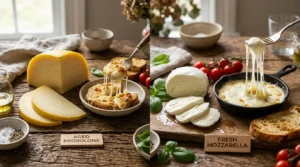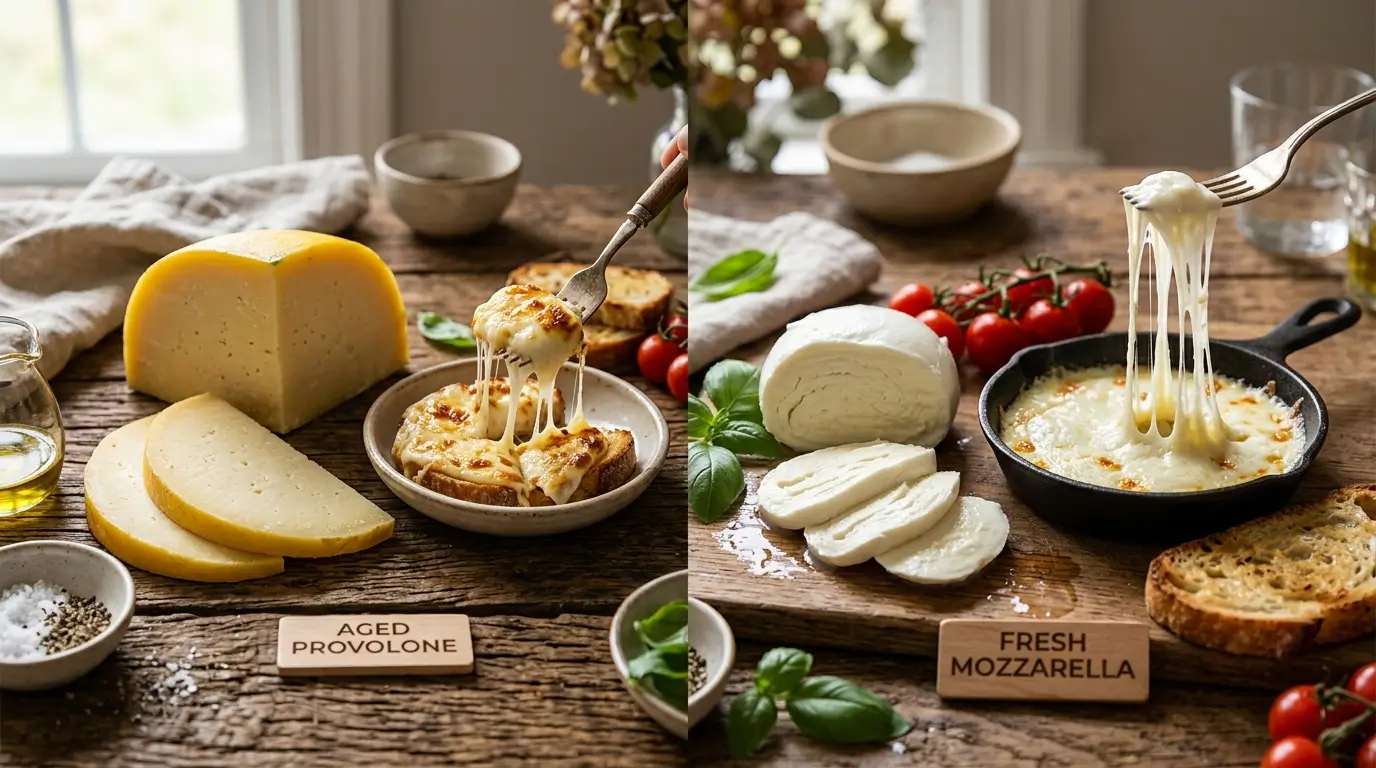
Although both cheeses originated in Italy and are made from cow’s milk (traditionally, mozzarella may also be made from buffalo milk), they differ in their production process, flavor, texture, and culinary uses.
Provolone is an aged cheese with a firmer texture and a richer, sharper flavor that becomes stronger as it matures.
Mozzarella is a fresh cheese known for its soft texture, mild milky taste, and excellent melting properties, making it the preferred choice for pizzas and many Italian dishes.
Why Is It Important to Know the Difference?
Understanding the difference between provolone and mozzarella benefits both beginners and experienced cooks for several reasons.
Helps You Choose the Right Cheese
Each cheese performs differently during cooking. Using the right one improves the taste and appearance of your dish.
Improves Cooking Skills
Learning the characteristics of different cheeses helps people prepare authentic Italian recipes more successfully.
Saves Money
Buying the correct cheese for a recipe prevents waste and ensures better results.
Supports Food Education
Students of culinary arts, chefs, restaurant owners, and food bloggers often need accurate knowledge about cheese varieties.
Makes Better Food Pairings
Knowing which cheese pairs best with meats, vegetables, fruits, and bread enhances the dining experience.
Pronunciation
| Cheese | US Pronunciation | UK Pronunciation |
| Provolone | proh vuh LOHN | proh vuh LOH nee (slight variation) |
| Mozzarella | maht suh REL uh | mots uh REL uh |
Before We Compare Them…
Now that you understand the basics, let’s explore the difference between provolone and mozzarella in detail. Each cheese has its own history, texture, flavor, and purpose. The following comparisons will help you recognize when one is a better choice than the other.
Difference Between Provolone and Mozzarella
Provolone
Provolone originated in Southern Italy, particularly in regions like Campania and Basilicata. Today, it is also widely produced in Northern Italy using traditional aging techniques.
Example 1: An Italian deli serves aged provolone in classic submarine sandwiches.
Example 2: Traditional Italian cheese shops often hang provolone in large pear shaped forms for aging.
Mozzarella
Mozzarella originated near Naples in Southern Italy. Traditional mozzarella was made from the milk of water buffalo, although cow’s milk mozzarella is now more common worldwide.
Example 1: Authentic Neapolitan pizza uses fresh mozzarella.
Example 2: Caprese salad traditionally features fresh mozzarella with tomatoes and basil.
2. Production Process
Provolone
Provolone is made using the pasta filata (stretched curd) technique. After shaping, it is salted and aged for several weeks or even months.
Example 1: A cheesemaker ages provolone for six months to develop a stronger flavor.
Example 2: Long aging creates the firm texture preferred for slicing.
Mozzarella
Mozzarella is also made using the pasta filata process, but it is usually consumed fresh within a short period after production.
Example 1: Fresh mozzarella is sold in water or brine.
Example 2: Restaurants often receive fresh mozzarella daily for premium pizzas.
3. Aging
Provolone
Provolone is an aged cheese. The aging period may range from one month to over a year.
The longer it ages, the firmer and sharper it becomes.
Example 1: Mild provolone ages for about two to three months.
Example 2: Sharp provolone may mature for over one year.
Mozzarella
Mozzarella is generally not aged. It is intended to be eaten fresh.
Its freshness gives it a delicate taste and soft texture.
Example 1: Fresh mozzarella is best enjoyed within a few days.
Example 2: Pizza mozzarella is slightly dried but still not significantly aged.
4. Texture
Provolone
Provolone has a smooth, firm, and elastic texture that becomes harder with age.
It slices cleanly and holds its shape well.
Example 1: Deli sandwiches use thin slices of provolone.
Example 2: Cheese boards often include aged provolone because it cuts neatly.
Mozzarella
Mozzarella is soft, moist, and stretchy.
It contains more moisture than provolone.
Example 1: Fresh mozzarella tears apart easily by hand.
Example 2: Melted mozzarella creates long cheese pulls on pizza.
5. Flavor
Provolone
Provolone has a buttery flavor when young and develops a sharp, tangy, nutty taste as it ages.
Its flavor becomes more complex over time.
Example 1: Aged provolone adds bold flavor to grilled sandwiches.
Example 2: Cheese platters often include provolone because of its rich taste.
Mozzarella
Mozzarella has a delicate, creamy, milky flavor.
It complements other ingredients without overpowering them.
Example 1: Mozzarella enhances tomatoes without hiding their natural sweetness.
Example 2: Pizza toppings remain balanced because mozzarella has a mild taste.
6. Melting Ability
Provolone
Provolone melts smoothly and evenly, making it ideal for baked dishes and grilled sandwiches. Because it contains less moisture than mozzarella, it melts into a creamy layer without releasing much water.
Example 1: A grilled steak sandwich topped with provolone develops a rich, creamy layer of melted cheese.
Example 2: Baked pasta with provolone has a smooth, golden cheese topping that doesn’t become watery.
Mozzarella
Mozzarella is famous for its excellent melting ability and stretchy texture. Its high moisture content creates the classic “cheese pull” that many people love on pizza.
Example 1: Fresh mozzarella melts beautifully on a Margherita pizza.
Example 2: Mozzarella sticks become soft and stretchy when fried.
7. Common Culinary Uses
Provolone
Provolone is commonly used in sandwiches, burgers, baked pasta, casseroles, cheese platters, and Italian American dishes. Its stronger flavor makes it an excellent choice when the cheese should stand out.
Example 1: Italian submarine sandwiches often include sliced provolone.
Example 2: Cheeseburgers topped with provolone offer a richer taste than those made with mild cheese.
Mozzarella
Mozzarella is one of the world’s most versatile cheeses. It is commonly used for pizza, lasagna, salads, pasta, appetizers, and baked dishes.
Example 1: Caprese salad combines mozzarella with tomatoes, basil, and olive oil.
Example 2: Lasagna recipes often include layers of mozzarella for a creamy texture.
8. Moisture Content
Provolone
Provolone contains relatively low moisture because it is aged. This gives it a dense structure and a longer shelf life.
Example 1: Provolone slices remain firm even after several days in the refrigerator.
Example 2: Aged provolone is easy to grate over pasta.
Mozzarella
Mozzarella has a high moisture content, especially fresh mozzarella stored in brine. This makes it soft and juicy but also gives it a shorter shelf life.
Example 1: Fresh mozzarella releases moisture when sliced.
Example 2: Pizza makers sometimes drain fresh mozzarella before baking to avoid excess water.
9. Nutritional Value
Provolone
Provolone is rich in calcium, protein, phosphorus, and vitamin B12. Since it is aged, it generally contains more sodium than fresh mozzarella.
Example 1: Athletes may include provolone in sandwiches for additional protein.
Example 2: Cheese platters featuring provolone provide a good source of calcium.
Mozzarella
Mozzarella is also an excellent source of calcium and protein. Fresh mozzarella is often slightly lower in sodium and calories than aged provolone, depending on the variety.
Example 1: Many people choose mozzarella for lighter salads.
Example 2: Homemade pizzas can include part skim mozzarella to reduce fat intake.
10. Shelf Life and Storage
Provolone
Because provolone is aged and contains less moisture, it lasts longer when refrigerated. Proper wrapping helps preserve its flavor and texture.
Example 1: A block of provolone may remain fresh for several weeks after opening if stored properly.
Example 2: Vacuum sealed provolone can be stored for an extended period before opening.
Mozzarella
Fresh mozzarella is highly perishable and should be eaten within a few days. It is usually stored in water or brine to maintain its freshness.
Example 1: Fresh mozzarella purchased today is best enjoyed within two or three days.
Example 2: Leftover mozzarella should be kept refrigerated in its original liquid whenever possible.
Nature and Characteristics of Provolone and Mozzarella
Nature and Characteristics of Provolone
Provolone is an aged, semi hard Italian cheese with a firm yet smooth texture. As it matures, its flavor becomes deeper, sharper, and more complex.
It slices neatly, melts evenly, and pairs well with meats, breads, and roasted vegetables. Due to its aging process, provolone develops a stronger aroma and a longer shelf life than fresh cheeses. It is valued for its versatility in sandwiches, baked dishes, and cheese boards.
Nature and Characteristics of Mozzarella
Mozzarella is a fresh, soft Italian cheese recognized for its delicate texture and mild, milky flavor. It contains more moisture than most aged cheeses, making it juicy and exceptionally stretchy when melted.
Fresh mozzarella is commonly stored in brine to preserve its quality. It is widely appreciated for pizzas, salads, pasta dishes, and appetizers because it blends harmoniously with other ingredients rather than overpowering them.
Why Are People Confused Between Provolone and Mozzarella?
Many people assume provolone and mozzarella are the same because they share several similarities.
Both originated in Italy, both are made using the pasta filata (stretched curd) method, and both are commonly used in pizzas, sandwiches, and pasta dishes. Their pale color and excellent melting qualities further add to the confusion.
Another reason is that restaurants sometimes substitute one cheese for the other depending on availability or the desired flavor profile. Grocery stores also display them side by side in the dairy section, leading shoppers to think they are interchangeable.
However, the differences become clear when considering flavor, aging, texture, moisture content, and intended culinary uses.
Difference and Similarity Between Provolone and Mozzarella
| Feature | Provolone | Mozzarella | Similarity |
| Origin | Italy | Italy | Both originated in Italy |
| Cheese Type | Aged, semi hard | Fresh, soft | Both are Italian cheeses |
| Flavor | Mild to sharp | Mild and milky | Both have pleasant dairy flavors |
| Texture | Firm and smooth | Soft and moist | Both are elastic cheeses |
| Aging | Aged for weeks or months | Usually fresh | Both use the stretched curd method |
| Moisture | Low | High | Both contain natural milk fats |
| Melting | Smooth and creamy | Stretchy and gooey | Both melt well |
| Shelf Life | Long | Short | Both require refrigeration |
| Best Uses | Sandwiches, burgers, baked dishes | Pizza, salads, lasagna | Both are versatile in cooking |
| Nutrition | High in protein and calcium | High in protein and calcium | Both provide valuable nutrients |
When Provolone Is the Better Choice
Provolone is the better option when you want a cheese with a richer, more pronounced flavor. It works exceptionally well in hot sandwiches, burgers, baked pasta, casseroles, and cheese platters because its firm texture and aging process give it depth and complexity.
Since provolone contains less moisture, it browns nicely and creates a creamy finish without making dishes watery. If your recipe requires a cheese that contributes a noticeable savory taste, provolone is an excellent choice.
It is also ideal for recipes that need longer cooking times, as it maintains its structure while melting evenly.
When Mozzarella Is the Better Choice
Mozzarella is the preferred choice for recipes that call for a soft texture and outstanding meltability.
Its mild flavor allows other ingredients, such as tomatoes, herbs, and sauces, to shine. Fresh mozzarella is perfect for Caprese salad, while low moisture mozzarella is the standard cheese for pizza because of its stretchy, golden melt.
Mozzarella is also excellent in lasagna, baked pasta, stuffed bread, and appetizers. If you want a cheese that creates the classic cheese pull and a creamy mouthfeel without overpowering the dish, mozzarella is the better option. It is especially suitable for fresh, light, and traditional Italian recipes.
How the Keywords Are Used in Metaphors and Similes
Although provolone and mozzarella are primarily names of cheeses, writers and speakers sometimes use them metaphorically to describe personalities, situations, or experiences.
Provolone in Metaphors
Provolone often symbolizes strength, maturity, richness, and complexity because it develops a stronger flavor as it ages.
Examples:
- “Her leadership was like provolone—strong, dependable, and appreciated more over time.”
- “His experience aged like provolone, becoming more valuable every year.”
- “The team’s strategy had the depth of aged provolone.”
Mozzarella in Metaphors
Mozzarella usually represents freshness, flexibility, softness, and harmony because of its mild taste and stretchy texture.
Examples:
- “Her smile was as comforting as fresh mozzarella.”
- “The new friendship blended like mozzarella on pizza.”
- “His personality was soft and welcoming, just like mozzarella.”
Similes Using Provolone and Mozzarella
Provolone
- As rich as aged provolone.
- As firm as a slice of provolone.
- As bold as sharp provolone.
Example Sentence:
“The professor’s knowledge was as rich as aged provolone.”
Mozzarella
- As soft as fresh mozzarella.
- As smooth as melted mozzarella.
- As stretchy as mozzarella on pizza.
Example Sentence:
“The dough stretched like melted mozzarella.”
Connotative Meanings
| Keyword | Positive Meaning | Negative Meaning | Neutral Meaning |
| Provolone | Maturity, strength, richness, experience | Sometimes viewed as too sharp or overpowering | A traditional aged Italian cheese |
| Mozzarella | Freshness, comfort, harmony, softness | Sometimes considered too mild or bland | A fresh Italian cheese used in many recipes |
Examples
Positive
- “She brings provolone like wisdom to every discussion.”
- “His kindness spreads like mozzarella across the team.”
Negative
- “The cheese flavor was as sharp as old provolone.”
- “His opinion lacked impact—it was as mild as mozzarella.”
Neutral
- “The recipe requires either provolone or mozzarella.”
- “Both cheeses are sold in the dairy section.”
Idioms or Proverbs Related to the Words
There are no widely recognized English idioms or traditional proverbs specifically featuring the words provolone or mozzarella. However, these cheeses commonly appear in modern food related expressions.
Expression 1
“That’s the extra cheese on the pizza.”
Meaning: An added benefit.
Example:
“Getting free dessert was the extra cheese on the pizza.”
Expression 2
“Easy as making mozzarella.”
(Informal expression among some chefs.)
Meaning: Something relatively simple for an experienced person.
Example:
“For an expert baker, making fresh cheese is easy as making mozzarella.”
Expression 3
“Age like fine cheese.”
Meaning: To improve with time.
Example:
“Her cooking skills have aged like fine cheese.”
Works in Literature Mentioning the Keywords
While provolone is rarely the main subject of literary works, mozzarella appears in cookbooks, culinary writing, memoirs, and food literature.
Provolone
- The Silver Spoon
- Genre: Cookbook
- Writer: Editoriale Domus
- Year: 1950
- Includes recipes using provolone.
- Italian Regional Cooking
- Genre: Culinary
- Writer: Ada Boni
- Year: 1969
- Discusses traditional Italian cheeses, including provolone.
Mozzarella
- Essentials of Classic Italian Cooking
- Genre: Cookbook
- Writer: Marcella Hazan
- Year: 1992
- Features numerous mozzarella recipes.
- The Mozza Cookbook
- Genre: Cookbook
- Writer: Nancy Silverton
- Year: 2011
- Focuses on mozzarella based dishes.
Movies Featuring the Keywords
Neither provolone nor mozzarella has many feature films named directly after the cheese. However, both appear in documentaries and food related productions.
Mozzarella
- Mozzarella Stories
- Release Year: 2011
- Country: Italy
- Genre: Comedy Drama
- Pizza: The Movie
- Release Year: 2019
- Country: United States
- Features mozzarella as an essential pizza ingredient.
Provolone
There are no major internationally recognized feature films titled “Provolone.” However, provolone is frequently featured in documentaries and television programs about Italian cuisine and artisanal cheesemaking.
Frequently Asked Questions (FAQs)
1. What is the main difference between provolone and mozzarella?
The main difference is that provolone is an aged cheese with a firmer texture and stronger flavor, whereas mozzarella is a fresh cheese with a soft texture and mild taste.
2. Which cheese melts better?
Both melt well, but mozzarella creates the famous stretchy cheese pull, while provolone melts into a smoother, creamier layer.
3. Can provolone replace mozzarella?
Yes. Provolone can replace mozzarella in many recipes, especially sandwiches and baked dishes, though the flavor will be stronger and richer.
4. Which cheese is healthier?
Both are nutritious and provide protein and calcium. Fresh mozzarella is often slightly lower in sodium and calories, while provolone generally contains more sodium because it is aged.
5. Which cheese is best for pizza?
Low moisture mozzarella is the traditional choice for pizza because of its stretchiness and balanced flavor. Provolone can be added for extra richness or combined with mozzarella for a more complex taste.
How Both Cheeses Are Useful for Our Surroundings
Provolone and mozzarella contribute to society in several meaningful ways. They support dairy farming, create employment in cheesemaking and food production, and play an important role in the hospitality and restaurant industries. These cheeses are rich in protein and calcium, making them valuable components of a balanced diet when consumed in moderation.
Traditional cheesemaking also preserves culinary heritage and promotes local economies, particularly in regions known for artisan dairy products.
Additionally, modern dairy production increasingly focuses on sustainable farming practices, helping reduce environmental impact while maintaining high quality cheese production.
Final Words for Both
Provolone is the perfect choice for those who enjoy bold, mature flavors and a firmer texture. It enhances sandwiches, baked dishes, burgers, and cheese boards with its rich character.
Mozzarella is ideal for people who appreciate freshness, creaminess, and excellent melting qualities. It remains the preferred cheese for pizzas, salads, lasagna, and many traditional Italian recipes.
Both cheeses deserve a place in every kitchen because each offers unique qualities that suit different recipes and personal tastes.
Conclusion
The difference between provolone and mozzarella goes far beyond appearance. Although both cheeses share Italian origins and are produced using the stretched curd technique, they differ significantly in flavor, texture, moisture, aging, and culinary applications.
Provolone delivers a bold, mature taste that improves with age, making it ideal for sandwiches, baked dishes, and cheese platters. Mozzarella, on the other hand, is prized for its soft texture, mild flavor, and exceptional melting ability, making it the classic choice for pizzas and fresh salads.
By understanding the difference between provolone and mozzarella, you can confidently choose the right cheese for every recipe, improve your cooking skills, and enjoy authentic flavors that enhance every meal.

Sophia Bennett is a content researcher and editor at Compadiff, where she specializes in creating clear and engaging comparison articles. Her work focuses on explaining differences in health, lifestyle, education, and everyday topics in a way that is easy for readers to understand.