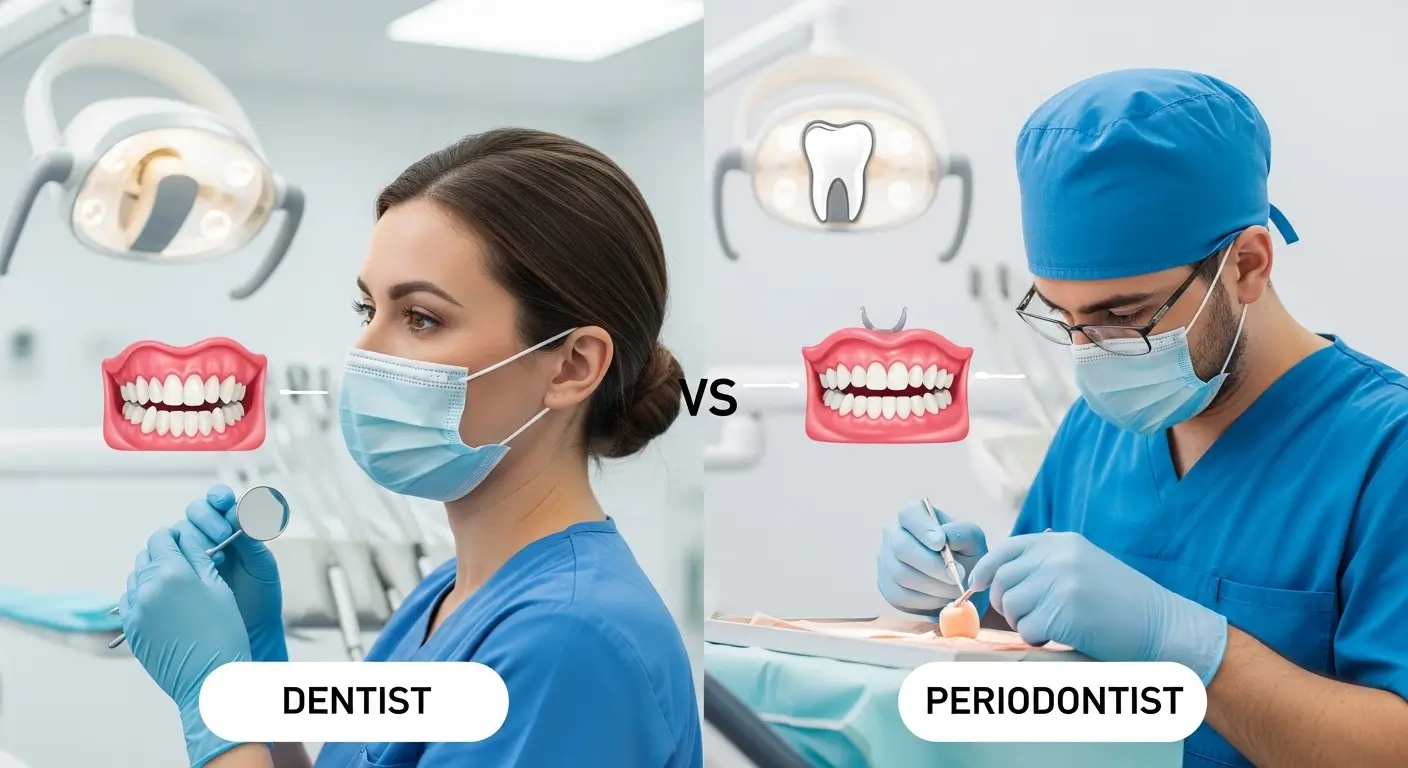
A few months ago, a friend complained about bleeding gums and booked an appointment with a general dentist. After a quick checkup, the dentist referred him to a specialist—a periodontist. That moment made him realize there is a clear difference between dentist and periodontist, something many people don’t fully understand.
A dentist is a general oral health professional who takes care of teeth, cavities, and overall hygiene. A periodontist, on the other hand, specializes in treating gum diseases and supporting structures of the teeth. Understanding the difference between dentist and periodontist can help you get the right treatment at the right time.
Whether you’re a beginner or someone experienced with dental care, knowing the difference between dentist and periodontist ensures better decisions. In fact, the difference between dentist and periodontist plays a crucial role in maintaining long-term oral health.
Key Difference Between the Both
The main difference is that a dentist provides general oral care, while a periodontist focuses specifically on gum health, gum diseases, and dental implants.
Why Is Their Difference Necessary to Know?
Understanding this difference is important for both learners and experts. For patients, it ensures timely and correct treatment. For professionals, it improves specialization and efficiency. In society, proper dental care reduces health risks, improves confidence, and prevents serious conditions like gum disease from spreading.
Pronunciation (US & UK)
- Dentist
- US: den-tist
- UK: den-tist
- Periodontist
- US: pair-ee-oh-DON-tist
- UK: peh-ree-oh-DON-tist
Before we explore deeper, let’s break down their differences in a simple and practical way.
Difference Between Dentist and Periodontist
1. Education and Training
Dentists complete general dental education. Periodontists receive additional specialized training.
- Example 1: A dentist studies overall oral care.
- Example 2: A periodontist studies gum surgery and implants.
2. Area of Focus
Dentists focus on teeth and general hygiene. Periodontists focus on gums.
- Example 1: Dentist treats cavities.
- Example 2: Periodontist treats gum infections.
3. Type of Treatments
Dentists perform basic procedures. Periodontists handle advanced gum treatments.
- Example 1: Dentist does fillings.
- Example 2: Periodontist performs gum grafting.
4. Gum Disease Treatment
Dentists treat mild gum issues. Periodontists treat severe cases.
- Example 1: Dentist manages early gingivitis.
- Example 2: Periodontist treats advanced periodontitis.
5. Dental Implants
Dentists may provide implants, but periodontists specialize in them.
- Example 1: Dentist places simple implants.
- Example 2: Periodontist handles complex implant surgeries.
6. Surgical Expertise
Dentists perform minor surgeries. Periodontists perform advanced surgeries.
- Example 1: Dentist extracts teeth.
- Example 2: Periodontist performs gum reshaping.
7. Patient Referral
Dentists often refer patients to periodontists.
- Example 1: Dentist refers for severe gum bleeding.
- Example 2: Dentist refers for implant complications.
8. Tools and Techniques
Periodontists use more specialized tools.
- Example 1: Dentist uses standard dental tools.
- Example 2: Periodontist uses advanced surgical instruments.
9. Frequency of Visit
Dentists are visited regularly. Periodontists are visited when needed.
- Example 1: Routine checkups with dentist.
- Example 2: Specialized visit to periodontist.
10. Role in Oral Health
Dentists maintain overall oral health. Periodontists ensure gum stability.
- Example 1: Dentist cleans teeth.
- Example 2: Periodontist saves damaged gums.
Nature and Behaviour
- Dentist: Generalist, preventive, and routine-focused. Helps maintain overall oral hygiene.
- Periodontist: Specialist, precise, and treatment-focused. Deals with complex gum issues.
Why People Are Confused About Their Use?
People are confused because both professionals work in oral healthcare and often operate in the same clinics. The overlap in services, especially in early gum treatment, makes it difficult to distinguish their roles.
Difference and Similarity Table
| Feature | Dentist | Periodontist | Similarity |
| Role | General oral care | Gum specialist | Oral health |
| Training | Basic dental degree | Advanced specialization | Medical field |
| Focus | Teeth and hygiene | Gums and bone structure | Patient care |
| Treatments | Fillings, cleaning | Gum surgery, implants | Treatment-based |
| Visits | Regular | Occasional | Clinic visits |
Which Is Better in What Situation?
Dentist:
A dentist is better for routine care, including checkups, cleaning, fillings, and early-stage oral issues. If you want to maintain overall dental hygiene or detect problems early, visiting a dentist regularly is the best choice.
Periodontist:
A periodontist is better for advanced gum problems, such as bleeding gums, gum recession, or dental implants. If your condition is complex or requires surgery, a periodontist provides specialized and targeted treatment.
Metaphors and Similes
- A dentist is like a “family doctor” for your teeth.
- A periodontist is like a “specialist surgeon” for your gums.
Connotative Meaning
- Dentist: Positive (care, maintenance)
- Example: “A dentist ensures a healthy smile.”
- Periodontist: Neutral to positive (specialized care)
- Example: “A periodontist restores gum health.”
Idioms or Proverbs
- “Prevention is better than cure.”
- Example: Regular dentist visits prevent serious gum issues.
Works in Literature
- The Dentist (Short Story, Tim Sullivan, 2013)
- Gum Disease and You (Health Guide, Unknown Author, 2018)
Movies Related to the Keywords
- The Dentist (1996, USA)
- The Dentist 2 (1998, USA)
FAQs
1. Can a dentist treat gum disease?
Yes, but only mild cases. Severe cases require a periodontist.
2. Do I need a referral to see a periodontist?
Not always, but dentists often recommend it.
3. Who performs dental implants?
Both can, but periodontists specialize in implants.
4. How often should I visit a dentist?
Every 6 months for routine checkups.
5. Is a periodontist more qualified than a dentist?
They are more specialized, not necessarily “more qualified.”
How Both Are Useful for Surroundings
Both professionals contribute to public health by preventing oral diseases, improving hygiene, and increasing awareness about dental care in society.
Final Words for Both
Dentists maintain your smile, while periodontists protect the foundation of that smile. Both are essential for complete oral health.
Conclusion
The difference between dentist and periodontist is essential for understanding proper oral care. While dentists handle general dental needs, periodontists focus on specialized gum treatments.
Knowing when to visit each can save time, money, and discomfort. Whether it’s routine cleaning or advanced gum surgery, both professionals play a vital role in keeping your smile healthy and strong. Making the right choice ensures better care and long-term dental wellness.

Daniel Carter is a research writer and comparison specialist at Compadiff. He focuses on breaking down complex topics into simple explanations so readers can clearly understand the differences between similar concepts, products, and ideas.