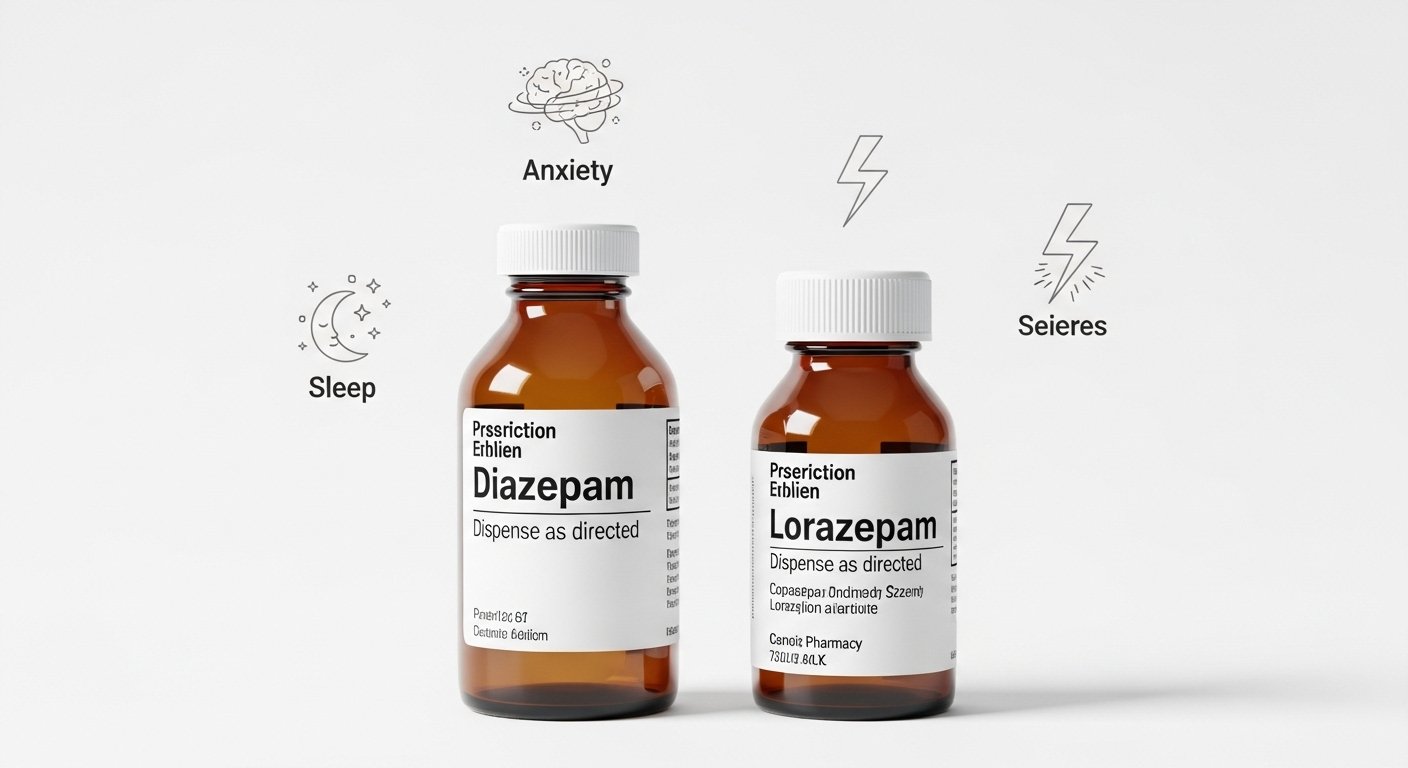
Imagine a person struggling with anxiety before a big presentation. A doctor may prescribe diazepam or lorazepam to help calm their nerves. Both medications belong to the benzodiazepine class and are widely used to manage anxiety, insomnia, and seizures. However, understanding the difference between diazepam and lorazepam is crucial for safe and effective use.
While diazepam has a longer-lasting effect and is often used for muscle relaxation, lorazepam acts faster and is preferred for acute anxiety attacks. Learning the difference between diazepam and lorazepam helps patients, caregivers, and healthcare professionals make informed choices, ensuring the right medicine is used in the right situation.
Pronunciation: Diazepam – US /ˈdaɪ.əˌzɛp.æm/, UK /ˈdaɪ.əˌzɛp.əm/; Lorazepam – US /lɔːˈræz.əˌpæm/, UK /lɒˈræz.ə.pæm/.
Let’s dive deeper into the main differences and uses of these medications.
Difference Between Diazepam and Lorazepam
1. Duration of Action
- Diazepam: Long-acting. Can last up to 24 hours.
- Example: Helps in chronic anxiety management.
- Example: Used for long-term muscle spasm relief.
- Lorazepam: Shorter-acting, 6–8 hours.
- Example: Effective for acute panic attacks.
- Example: Used for short-term insomnia relief.
2. Onset of Action
- Diazepam: Works slowly, taking 30–60 minutes.
- Example: Useful for scheduled anxiety treatment.
- Example: Administered for gradual sedation in procedures.
- Lorazepam: Rapid onset, 15–30 minutes.
- Example: Emergency seizure control.
- Example: Quick relief for sudden anxiety.
3. Medical Uses
- Diazepam: Muscle relaxation, anxiety, alcohol withdrawal.
- Example: Prescribed to reduce spasticity in MS patients.
- Example: Helps patients taper off alcohol safely.
- Lorazepam: Anxiety, sedation, acute seizures.
- Example: Treats status epilepticus in emergencies.
- Example: Reduces severe anxiety before surgery.
4. Half-life
- Diazepam: Long half-life, 20–50 hours.
- Example: Single daily dose can maintain effect.
- Example: Less frequent dosing for chronic patients.
- Lorazepam: Shorter half-life, 10–20 hours.
- Example: Needs multiple doses for continuous effect.
- Safer for older adults due to shorter accumulation.
5. Metabolism
- Diazepam: Metabolized in the liver; active metabolites prolong effect.
- Example: Requires caution in liver disease.
- Example: May interact with other liver-metabolized drugs.
- Lorazepam: Metabolized differently; fewer active metabolites.
- Example: Safer for patients with liver problems.
- Example: Fewer drug interactions compared to diazepam.
6. Formulations
- Diazepam: Tablets, injections, oral drops, rectal gel.
- Example: Rectal gel for pediatric seizures.
- Example: Injection in hospital for sedation.
- Lorazepam: Tablets, injections, sublingual drops.
- Example: Sublingual for immediate anxiety relief.
- Example: IV injection for emergency seizure management.
7. Side Effects
- Diazepam: Drowsiness, fatigue, dizziness, memory problems.
- Example: May impair driving after dose.
- Example: Can cause prolonged sedation in older patients.
- Lorazepam: Sedation, weakness, mild confusion.
- Example: Can cause short-term memory issues.
- Example: Less cumulative sedation than diazepam.
8. Addiction and Dependence
- Diazepam: Higher risk due to long-lasting effects.
- Example: Misuse possible in chronic anxiety.
- Example: Gradual tapering recommended to avoid withdrawal.
- Lorazepam: Moderate risk; shorter duration.
- Example: Used carefully in acute anxiety cases.
- Example: Withdrawal can still occur if misused.
9. Target Patients
- Diazepam: Adults with chronic anxiety, muscle disorders, or alcohol withdrawal.
- Example: MS patients needing muscle relaxant.
- Example: Adults with long-term anxiety.
- Lorazepam: Patients needing rapid relief, older adults, emergency cases.
- Example: Older patients having sudden panic episodes.
- Example: Patients in emergency seizure wards.
10. Cost and Availability
- Diazepam: Usually cheaper, widely available.
- Example: Generic brands accessible globally.
- Example: Prescribed in outpatient clinics.
- Lorazepam: Slightly more expensive, more controlled.
- Example: Preferred in hospitals for acute care.
- Example: Prescription-only in most countries.
Nature and Behavior
- Diazepam: Calm, long-lasting, predictable. Often referred to as “steady calming.”
- Lorazepam: Fast-acting, sharp, immediate effect. Often referred to as “quick relief.”
People often confuse them because both treat anxiety and sedation but differ in duration, onset, and metabolism.
Table: Difference and Similarity Between Diazepam and Lorazepam
| Feature | Diazepam | Lorazepam | Similarity |
| Duration | Long-lasting | Shorter-lasting | Both are benzodiazepines |
| Onset | 30–60 min | 15–30 min | Reduce anxiety |
| Half-life | 20–50 hrs | 10–20 hrs | Oral & injectable forms |
| Metabolism | Liver; active metabolites | Liver; fewer metabolites | Can cause sedation |
| Common Uses | Anxiety, muscle relaxant | Anxiety, acute seizures | Prescription only |
| Risk of Dependence | Higher | Moderate | Misuse risk exists |
Which Is Better in What Situation?
- Diazepam is better for chronic anxiety, muscle spasms, or alcohol withdrawal because of its long-lasting effect. Patients needing steady relief benefit most.
- Lorazepam is ideal for acute panic attacks, short-term insomnia, or emergency seizures. Its rapid action ensures immediate calming effects.
Metaphors, Similes, and Connotations
- Diazepam: “Like a calm river flowing steadily.” Positive connotation.
- Lorazepam: “Like a lightning bolt calming the storm.” Neutral-positive.
Idioms/Proverbs
- “Steady as a rock” – relates to diazepam’s long effect.
- “Strike while the iron is hot” – relates to lorazepam’s rapid action.
Works in Literature
- The Anxiety Cure (Self-help, Dr. Archibald, 2010) – mentions both medications.
- Calm Minds (Medical thriller, Jane Harper, 2018) – discusses lorazepam in emergencies.
Movies on Keywords
- Calm Before the Storm (2020, USA) – diazepam central in therapy scenes.
- Panic Point (2019, UK) – lorazepam used in sudden anxiety treatment.
Frequently Asked Questions
- Can diazepam and lorazepam be used together?
Rarely, only under supervision; risk of over-sedation exists. - Which works faster for panic attacks?
Lorazepam acts faster and is preferred for sudden attacks. - Are they addictive?
Both have dependence potential; diazepam slightly higher. - Which is safer for older patients?
Lorazepam is safer due to shorter half-life and fewer active metabolites. - Can they be used for seizures?
Yes, lorazepam is commonly used in emergencies; diazepam in chronic seizure management.
Usefulness in Surroundings
- Calm anxious patients in hospitals and homes.
- Aid caregivers in managing sudden panic or muscle spasms.
- Reduce social anxiety and improve productivity.
Final Words
Both diazepam and lorazepam are vital tools in mental health and emergency care. Correct understanding ensures safety and effectiveness, helping millions lead calmer, more controlled lives.
Conclusion
Understanding the difference between diazepam and lorazepam is essential for healthcare providers, patients, and caregivers. While diazepam offers long-lasting relief for chronic conditions, lorazepam provides rapid action for acute issues. Their correct use can prevent misuse, reduce anxiety, and improve quality of life.
Knowledge of their metabolism, onset, duration, and side effects ensures informed decisions. Both medications have unique roles in medical practice and society, making them indispensable when used responsibly. By exploring their differences and similarities, one can choose the most suitable option for each situation, enhancing overall mental and physical well-being.

Sophia Bennett is a content researcher and editor at Compadiff, where she specializes in creating clear and engaging comparison articles. Her work focuses on explaining differences in health, lifestyle, education, and everyday topics in a way that is easy for readers to understand.