One winter evening, a parent hears their child coughing with a strange barking sound and struggles to breathe. Panic sets in because breathing problems in children can be frightening. Doctors often mention two common respiratory illnesses in such situations: croup and RSV. Understanding the difference between croup and RSV helps parents and healthcare professionals respond quickly and correctly.
Croup is an illness that mainly affects the upper airway, causing swelling around the voice box and windpipe. RSV, short for Respiratory Syncytial Virus, is a viral infection that primarily targets the lungs and lower respiratory tract. Many parents search for the difference between croup and RSV because the symptoms sometimes appear similar in children. Knowing the difference between croup and RSV can help caregivers recognize warning signs early and seek proper treatment. In fact, understanding the difference between croup and RSV is important for both medical professionals and families.
Key Difference Between the Both
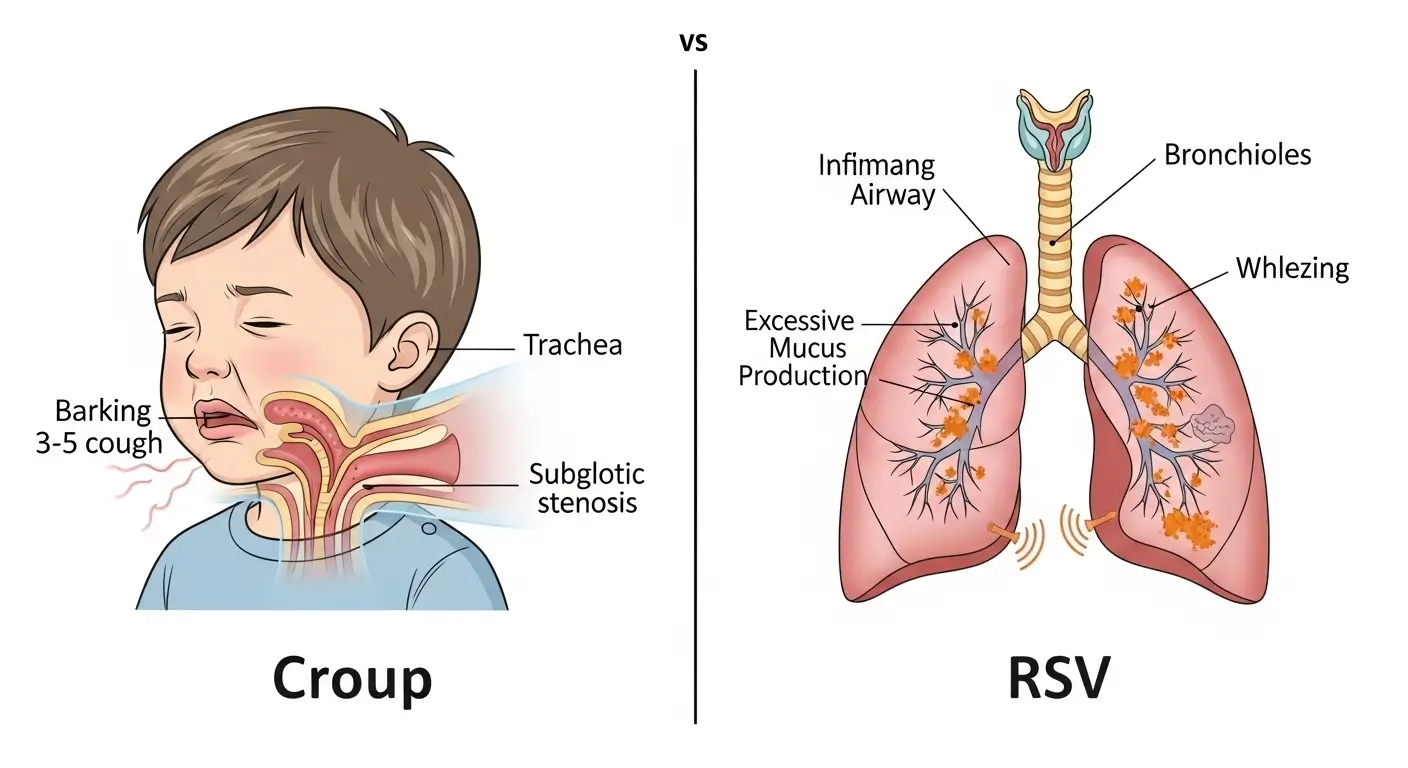
The main difference between croup and RSV lies in the part of the respiratory system they affect.
- Croup mostly affects the upper airway, especially the voice box (larynx) and windpipe (trachea).
- RSV mainly affects the lower respiratory tract, including the bronchioles and lungs.
Because of this difference, croup usually causes a barking cough, while RSV often leads to wheezing and breathing difficulty.
Why Their Difference Is Important for Learners and Experts
Understanding the difference between croup and RSV is essential for society because respiratory illnesses in children are common worldwide. Parents, teachers, and caregivers must recognize symptoms early to prevent complications.
For medical students and healthcare professionals, knowing these differences helps in accurate diagnosis and treatment planning. Early identification can reduce hospital admissions and serious breathing problems. In communities, awareness about these illnesses helps parents take preventive steps such as maintaining hygiene, avoiding exposure to sick individuals, and seeking timely medical care. Thus, understanding these diseases contributes to healthier families and better public health.
Pronunciation
Croup
- US: /kruːp/
- UK: /kruːp/
RSV (Respiratory Syncytial Virus)
- US: /ɑːr ɛs viː/
- UK: /ɑː ɛs viː/
Linking Hook
Although both illnesses affect breathing and often occur in children during cold seasons, their symptoms, causes, and treatments differ. To understand them clearly, we must explore the difference between croup and RSV in detail.
Difference Between Croup and RSV
1. Cause
Croup is usually caused by viruses such as parainfluenza that inflame the upper airway.
Examples:
- A child develops a barking cough after catching a cold virus.
- Seasonal viral infections in winter trigger croup in toddlers.
RSV is caused by the respiratory syncytial virus that infects the lungs and bronchioles.
Examples:
- Infants develop bronchiolitis after RSV infection.
- RSV spreads quickly in daycare centers during winter.
2. Area of Infection
Croup affects the upper airway, including the voice box and trachea.
Examples:
- Swelling around the vocal cords causes hoarseness.
- Children struggle to breathe when the airway narrows.
RSV affects the lower respiratory tract and lungs.
Examples:
- Infection leads to inflammation in small airways.
- Babies develop bronchiolitis due to RSV.
3. Main Symptom
The most recognizable symptom of croup is a barking cough.
Examples:
- The cough sounds like a seal barking.
- Symptoms worsen at night.
RSV often causes wheezing and rapid breathing.
Examples:
- Babies produce a whistling sound when breathing.
- Children breathe quickly due to lung infection.
4. Age Group Affected
Croup mainly affects young children between 6 months and 3 years.
Examples:
- Toddlers are more prone to airway swelling.
- Preschool children frequently develop mild croup.
RSV affects infants and young children but can also impact elderly people.
Examples:
- Premature babies may develop severe RSV infection.
- Older adults with weak immunity may get RSV.
5. Severity
Croup is usually mild and improves within a few days.
Examples:
- Steam inhalation helps relieve symptoms.
- Most children recover at home.
RSV can sometimes become severe and require hospitalization.
Examples:
- Infants may need oxygen support.
- Severe cases require medical monitoring.
6. Breathing Sound
Croup causes a harsh breathing sound called stridor.
Examples:
- A child makes a high-pitched sound while inhaling.
- Breathing becomes noisy during coughing fits.
RSV causes wheezing, especially during exhalation.
Examples:
- Doctors hear wheezing through a stethoscope.
- Children struggle to breathe out fully.
7. Fever Pattern
Croup may cause a mild fever.
Examples:
- The child has a low-grade fever.
- Fever often accompanies a cold.
RSV sometimes causes moderate fever.
Examples:
- Infants develop fever along with cough.
- Temperature rises as infection spreads.
8. Treatment Approach
Croup treatment focuses on reducing airway swelling.
Examples:
- Doctors prescribe steroids for severe swelling.
- Cool mist humidifiers help ease breathing.
RSV treatment focuses on supporting breathing and hydration.
Examples:
- Oxygen therapy may be required.
- Fluids help prevent dehydration.
9. Contagiousness
Croup spreads through respiratory droplets.
Examples:
- Children catch it from coughing classmates.
- Viral droplets spread during sneezing.
RSV spreads very easily through contact with infected surfaces or droplets.
Examples:
- Toys in daycare can spread RSV.
- Hand contact transmits the virus.
10. Duration
Croup usually lasts 3–5 days.
Examples:
- Symptoms improve after the second day.
- Barking cough gradually disappears.
RSV symptoms may last one to two weeks.
Examples:
- Infants take longer to recover.
- Cough may persist after infection.
Nature and Behaviour of Both
Croup:
Croup is an inflammatory respiratory illness mostly affecting young children. It typically begins like a common cold and progresses into a barking cough and hoarseness. The illness is usually mild but can become serious if airway swelling becomes severe.
RSV:
RSV is a contagious viral infection affecting the lungs and breathing passages. It spreads easily during cold seasons and may cause serious complications in infants, elderly individuals, and people with weak immune systems.
Why People Are Confused About Their Use
People often confuse croup and RSV because both cause coughing, breathing difficulty, and occur mainly in children during winter. In addition, both illnesses are viral infections and spread through respiratory droplets. However, the difference lies in their symptoms, affected airway areas, and severity.
Table: Difference and Similarity
| Feature | Croup | RSV | Similarity |
| Cause | Viral infection (often parainfluenza) | Respiratory syncytial virus | Both are viral |
| Area affected | Upper airway | Lower respiratory tract | Affect breathing |
| Main symptom | Barking cough | Wheezing | Cause cough |
| Age group | Toddlers | Infants and elderly | Common in children |
| Severity | Usually mild | Sometimes severe | Require care |
Which Is Better in What Situation?
Croup Situation
Croup is generally easier to manage in mild cases because symptoms often improve with home care. Humidified air, hydration, and rest help reduce coughing and breathing discomfort. In many situations, children recover quickly without hospitalization. However, severe cases still require medical attention to reduce airway swelling.
RSV Situation
RSV can be more serious, especially for infants and people with weak immune systems. Medical supervision may be necessary because breathing complications can develop quickly. Hospitals may provide oxygen therapy and supportive care. Although RSV can be dangerous, early treatment greatly improves recovery.
Use in Metaphors and Similes
Although medical terms are rarely used metaphorically, they sometimes appear in descriptive language.
Examples:
- “The problem spread through the company like RSV through a daycare center.”
- “The rumor echoed through the town like the barking cough of croup.”
Connotative Meaning
Croup:
Connotation: Mostly negative
Examples:
- “The child’s cough sounded like croup.”
- “Parents feared the night cough was croup.”
RSV:
Connotation: Negative
Examples:
- “Hospitals prepared for RSV season.”
- “Parents worried about RSV infections in winter.”
Idioms or Proverbs Related
There are no traditional idioms directly based on these medical terms, but similar health expressions exist.
Examples:
- “An ounce of prevention is worth a pound of cure.”
- “Health is wealth.”
Works in Literature
These illnesses rarely appear as main literary titles, but they are mentioned in medical and health literature.
- Respiratory Diseases in Children – Medical Textbook, Pediatric Medicine, various authors.
- Pediatric Respiratory Medicine – Medical reference book, 2008.
Movies Related to Respiratory Illness
While there are no films specifically named after these diseases, respiratory epidemics appear in medical dramas.
- Contagion – 2011, USA
- Outbreak – 1995, USA
Frequently Asked Questions
1. What is the main difference between croup and RSV?
Croup affects the upper airway and causes a barking cough, while RSV affects the lungs and often causes wheezing.
2. Which illness is more dangerous?
RSV is generally more serious, especially for infants.
3. Can adults get these illnesses?
Adults rarely get croup but can catch RSV, usually with mild symptoms.
4. Are both contagious?
Yes, both spread through respiratory droplets.
5. When should parents seek medical help?
If a child has severe breathing difficulty, high fever, or bluish skin, medical attention is necessary.
How Both Are Useful for Surroundings
Studying these illnesses helps medical professionals improve treatments and preventive measures. Awareness campaigns educate communities about respiratory hygiene, vaccination research, and early symptom recognition, ultimately improving public health.
Final Words for Both
Croup and RSV are common respiratory illnesses, especially in children. Though they share similarities in symptoms and seasonal patterns, their causes, severity, and treatment approaches differ.
Conclusion
Understanding the difference between croup and RSV is essential for parents, caregivers, and healthcare professionals. Both illnesses affect breathing and commonly occur during colder months, but they impact different parts of the respiratory system. Croup usually causes swelling in the upper airway and a barking cough, while RSV affects the lungs and can lead to wheezing and more severe breathing issues.
Recognizing these differences helps people respond quickly, seek medical advice when needed, and prevent complications. Awareness about these conditions improves early diagnosis and supports better health outcomes for children and vulnerable individuals. By learning about these illnesses, society can better protect children’s respiratory health and reduce the risks associated with seasonal infections.

Daniel Carter is a research writer and comparison specialist at Compadiff. He focuses on breaking down complex topics into simple explanations so readers can clearly understand the differences between similar concepts, products, and ideas.