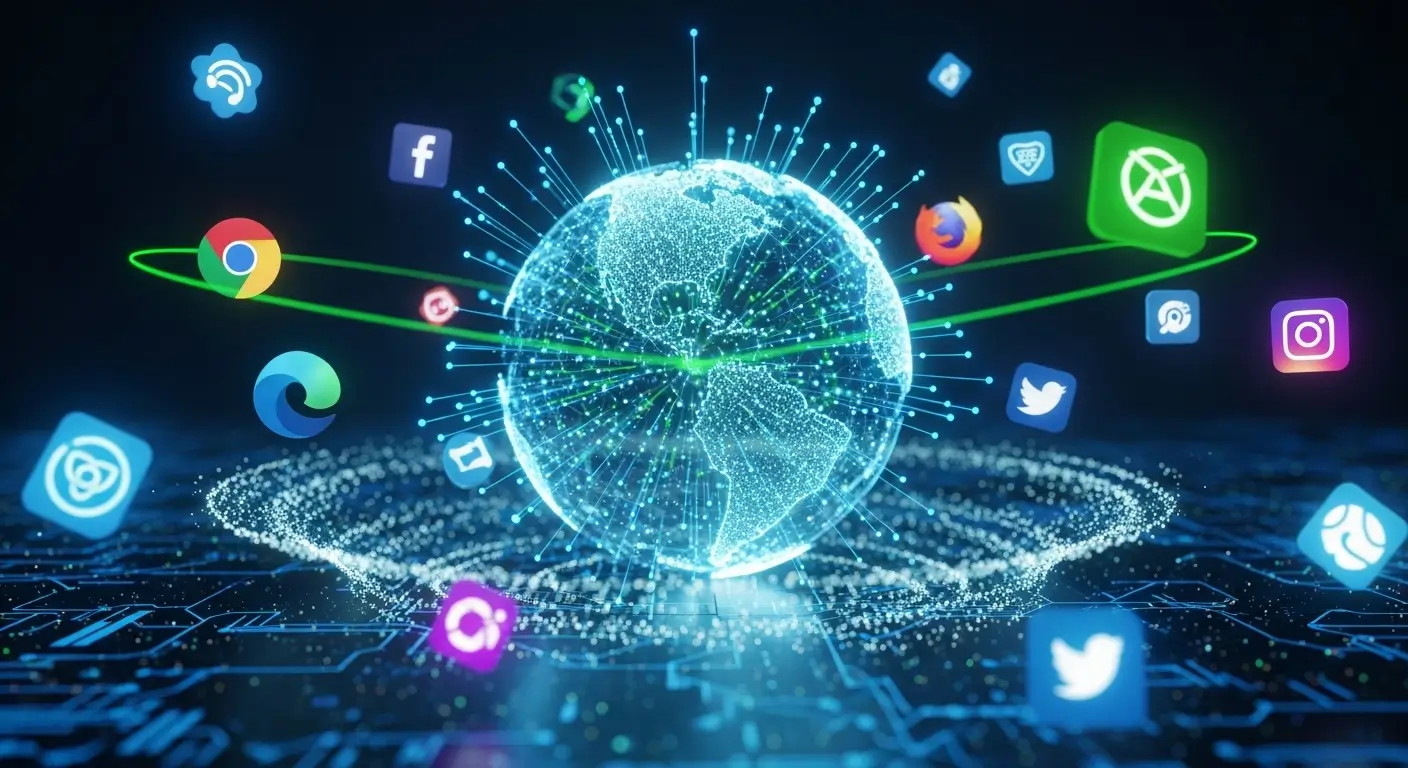
Imagine a student sitting in a coffee shop trying to open a website to finish an assignment. They connect their laptop to Wi-Fi, open a browser, and type a website address. Within seconds, information appears on the screen. Most people think they are simply using “the internet.” However, what they are actually using is the World Wide Web, which runs on top of the internet.
Understanding the difference between internet and www is important because these two terms are often used interchangeably, even though they are not the same. The difference between internet and www becomes clearer when we realize that the internet is the global network of computers, while the web is a service that uses that network.
For learners, students, and professionals in technology, knowing the difference between internet and www helps them understand how modern digital communication works. Once you explore the difference between internet and www, the entire structure of online communication becomes much easier to understand.
Key Difference Between the Two
The internet is the global infrastructure of interconnected computer networks, while the World Wide Web (WWW) is a collection of websites and web pages that operate on the internet using web browsers.
Why Their Difference Is Important for Learners and Experts
Understanding the difference between the internet and the web is important because these technologies form the backbone of modern society. The internet supports communication tools such as email, file transfer, online gaming, and streaming. Meanwhile, the World Wide Web provides access to websites, blogs, online stores, and digital libraries.
For learners, this knowledge improves digital literacy and helps them understand how online services function. For experts, especially developers and IT professionals, recognizing the distinction allows them to design better systems, improve network security, and optimize online platforms. In today’s connected society, where education, business, and entertainment rely on digital networks, knowing this difference is essential.
Pronunciation
Internet
- US: /ˈɪn.t̬ɚ.net/
- UK: /ˈɪn.tə.net/
World Wide Web (WWW)
- US: /ˌwɝːld ˌwaɪd ˈweb/
- UK: /ˌwɜːld ˌwaɪd ˈweb/
Linking Hook
Now that we understand their basic meanings and importance, let’s explore the difference between internet and www in detail through practical comparisons and examples.
Difference Between Internet and WWW
1. Definition
Internet:
The internet is a global network connecting millions of computers and devices worldwide.
Examples:
- Email services operate through the internet.
- Online gaming connects players through internet networks.
WWW:
The World Wide Web is a system of interlinked web pages accessed using browsers.
Examples:
- Visiting a blog or news website.
- Reading articles on educational websites.
2. Nature
Internet:
It is a physical and digital infrastructure consisting of cables, servers, routers, and protocols.
Examples:
- Fiber optic cables carrying data across continents.
- Data centers hosting global networks.
WWW:
It is a software-based system that uses internet infrastructure.
Examples:
- A website containing articles and images.
- An online shopping platform.
3. Purpose
Internet:
The internet allows communication and data transfer between devices.
Examples:
- Sending emails.
- Video calls between countries.
WWW:
The web provides access to information through websites.
Examples:
- Reading online news.
- Accessing educational tutorials.
4. Services
Internet:
Supports multiple services beyond websites.
Examples:
- Email communication.
- File sharing through FTP.
WWW:
Mainly provides web pages and websites.
Examples:
- Blogs and online magazines.
- Social networking websites.
5. Access Method
Internet:
Requires internet service providers and network protocols.
Examples:
- Connecting through broadband.
- Using mobile data.
WWW:
Accessed using web browsers.
Examples:
- Opening Chrome or Firefox.
- Searching through a browser address bar.
6. Development
Internet:
Developed as a network communication system.
Examples:
- Early military communication networks.
- University research networks.
WWW:
Developed later as a way to organize information online.
Examples:
- Creation of websites.
- Online publishing platforms.
7. Structure
Internet:
A network of networks.
Examples:
- Global ISP networks.
- Corporate and university networks.
WWW:
A collection of interconnected documents.
Examples:
- Hyperlinked web pages.
- Multimedia websites.
8. Dependency
Internet:
Works independently as the base network.
Examples:
- Email servers running without websites.
- Data transfer systems.
WWW:
Depends on the internet to function.
Examples:
- Websites loading through internet connectivity.
- Online pages requiring network access.
9. Technology Used
Internet:
Uses communication protocols like TCP/IP.
Examples:
- Data routing between servers.
- Device-to-device communication.
WWW:
Uses HTTP and HTML.
Examples:
- Loading web pages through HTTP.
- Displaying content through HTML.
10. Scope
Internet:
Covers all online communication systems.
Examples:
- Online messaging services.
- Cloud storage networks.
WWW:
Limited to websites and web pages.
Examples:
- Online articles and blogs.
- Web-based applications.
Nature and Behaviour
Internet:
The internet behaves as a massive infrastructure for communication and data transfer. It connects networks globally and supports many services beyond browsing.
WWW:
The web behaves as a user-friendly system for accessing information. It organizes digital content through hyperlinks and web pages.
Why People Are Confused About Their Use
Many people confuse these terms because they usually experience the internet through websites. Since browsing web pages is the most common online activity, people assume the internet and the web are the same. Media, casual conversation, and simplified explanations also contribute to this misunderstanding.
Table Showing Difference and Similarity
| Feature | Internet | World Wide Web |
| Definition | Global network infrastructure | Collection of web pages |
| Type | Network system | Information system |
| Function | Data communication | Accessing information |
| Technology | TCP/IP protocols | HTTP and HTML |
| Scope | Broad network services | Websites and pages |
| Dependency | Independent | Depends on internet |
| Example | Email system | Blogs and websites |
| Access | Network connection | Web browser |
| Nature | Hardware and software | Mostly software |
| Similarity | Both enable global communication and information sharing |
Which Is Better in What Situation?
Internet:
The internet is better when communication, data transfer, and networking are required. Businesses use it for cloud computing, video conferencing, and remote work systems. Without the internet infrastructure, online services could not exist.
WWW:
The web is better when users want to access information easily. Students, researchers, and general users rely on websites to find knowledge, read news, shop online, and learn new skills.
Use in Metaphors and Similes
- “The internet is like a highway connecting cities of information.”
- “The web spreads information like a spider’s web connecting ideas.”
- “Browsing the web is like walking through a digital library.”
Connotative Meaning
Internet
Positive:
- Global connection and innovation
Example: The internet opened opportunities for remote education.
Negative:
- Addiction or misinformation
Example: Excessive internet use can affect productivity.
Neutral:
- A technological system
Example: The internet connects millions of devices.
World Wide Web
Positive:
- Easy access to knowledge
Example: The web allows students to learn from anywhere.
Negative:
- Information overload
Example: The web sometimes spreads unreliable information.
Neutral:
- A platform for websites
Example: Businesses build their presence on the web.
Idioms or Expressions
Though not traditional idioms, common expressions include:
“Surfing the web”
Example: She spent the evening surfing the web for travel ideas.
“Connected to the internet”
Example: Our office stayed connected to the internet during the meeting.
Works in Literature
Internet
- The Internet Galaxy – Sociology/Technology – Manuel Castells – 2001
- Ten Arguments for Deleting Your Social Media Accounts Right Now – Nonfiction – Jaron Lanier – 2018
World Wide Web
- Weaving the Web – Technology Memoir – Tim Berners-Lee – 1999
- The Shallows – Technology & Society – Nicholas Carr – 2010
Movies Related to the Internet or Web
- The Social Network – 2010 – USA
- The Net – 1995 – USA
- Disconnect – 2012 – USA
- Searching – 2018 – USA
- The Internship – 2013 – USA
Frequently Asked Questions
1. Is the internet the same as the web?
No. The internet is the network infrastructure, while the web is a service running on it.
2. Can the internet exist without the web?
Yes. Services like email and file transfer existed before the web.
3. Who invented the World Wide Web?
The web was created by Tim Berners-Lee in 1989.
4. Do all internet services use the web?
No. Email, online gaming, and messaging can operate without web pages.
5. Why do people mix the two terms?
Because most people access the internet mainly through websites.
How Both Are Useful for Our Surroundings
The internet and the web together support education, business, healthcare, and communication. Schools use online platforms for learning, businesses rely on websites for marketing, and governments provide digital services to citizens. These technologies make information accessible to people everywhere.
Final Words for Both
The internet acts as the global digital backbone, while the web serves as the library of information built on that backbone. Together they shape modern communication and knowledge sharing.
Conclusion
The difference between internet and www is simple but very important. The internet is the global network infrastructure connecting computers around the world, while the World Wide Web is a system of websites and pages that run on that network. Although people often use these terms interchangeably, they serve different roles in digital communication.
Understanding their distinction helps learners grasp how online systems operate and enables professionals to develop better technology solutions. In today’s digital age, recognizing the difference between the internet and the web improves technological awareness and strengthens our ability to navigate the online world effectively.

Sophia Bennett is a content researcher and editor at Compadiff, where she specializes in creating clear and engaging comparison articles. Her work focuses on explaining differences in health, lifestyle, education, and everyday topics in a way that is easy for readers to understand.