A few years ago, a mechanic at a car workshop was trying to lift a heavy vehicle using a hydraulic jack, while right next to him a technician was using compressed air to power a drill. Both machines performed powerful tasks, yet they worked in completely different ways. This everyday situation perfectly shows the difference between hydraulic and pneumatic systems.
The difference between hydraulic and pneumatic lies mainly in the type of fluid they use liquid or air to generate power. While both systems are used in industries, construction, and transportation, understanding the difference between hydraulic and pneumatic helps in selecting the right tool for safety, efficiency, and cost. Whether in factories or hospitals, the difference between hydraulic and pneumatic systems plays a major role in modern technology and daily life.
Pronunciation of Hydraulic and Pneumatic
| Word | US Pronunciation | UK Pronunciation |
| Hydraulic | hy-DRAW-lik | hy-DRAW-lik |
| Pneumatic | noo-MAT-ik | nyoo-MAT-ik |
Key Difference Between the Both
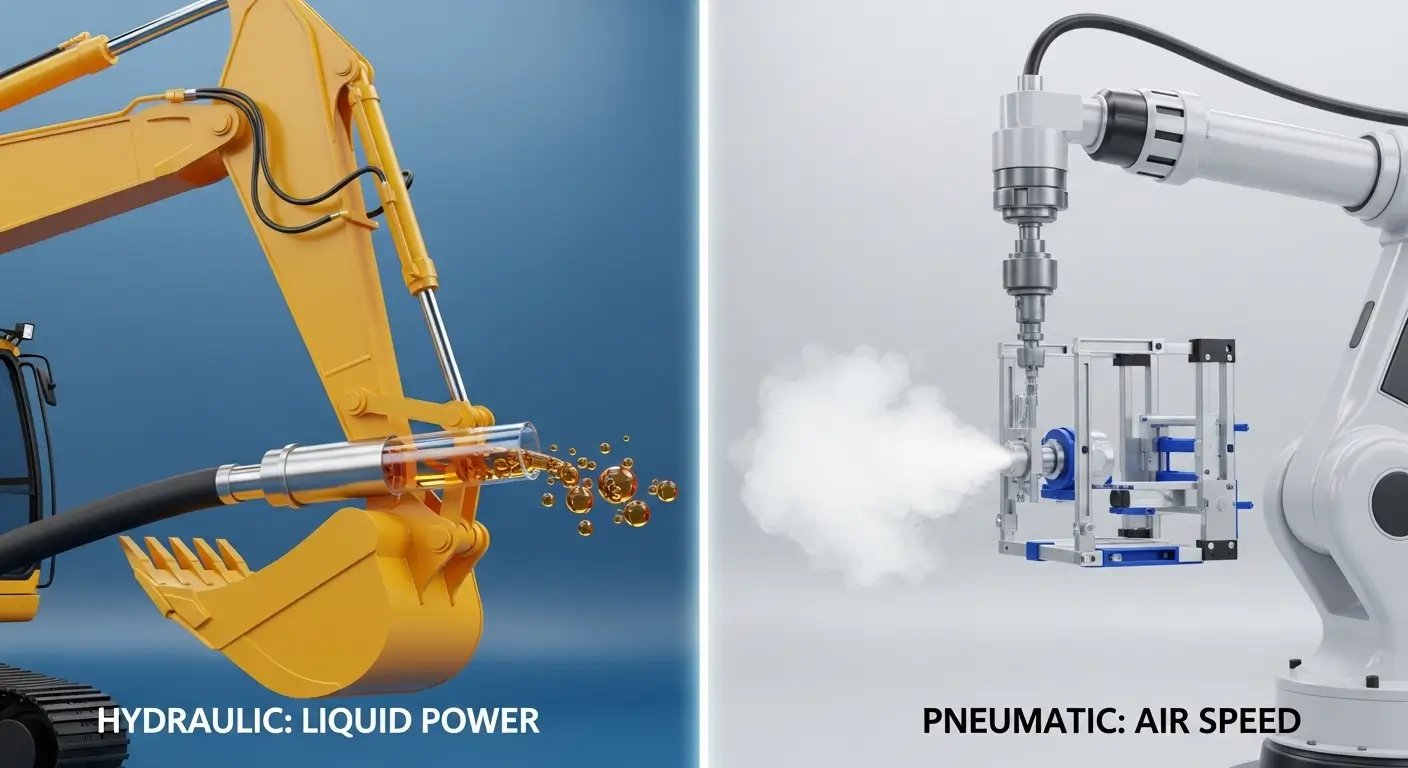
The key difference is simple: hydraulic systems use liquids (usually oil) to transmit power, while pneumatic systems use compressed air or gas. Liquids are incompressible, so hydraulics deliver stronger and more precise force. Air is compressible, making pneumatics lighter, faster, and safer but less powerful.
Why Is Their Difference Necessary to Know for Learners and Experts?
Understanding the difference between hydraulic and pneumatic is important for engineers, technicians, mechanics, and even students. Choosing the wrong system can lead to equipment failure, safety hazards, or unnecessary costs.
In society, these systems power elevators, medical devices, construction machines, aircraft brakes, and factory robots. Knowing their differences helps professionals design safer machines and helps learners understand how modern infrastructure works.
Linking Hook
Now that we understand their basic meaning and importance, let’s explore the detailed difference between hydraulic and pneumatic systems point by point.
Difference Between Hydraulic and Pneumatic
1. Working Medium
Hydraulic systems use liquid such as oil, while pneumatic systems use compressed air.
Examples:
- A hydraulic car jack lifts vehicles using oil pressure.
- Pneumatic nail guns use compressed air to drive nails into wood.
2. Power Output
Hydraulics provide greater force and power. Pneumatics provide less force but faster motion.
Examples:
- Excavators use hydraulics to dig heavy soil.
- Pneumatic tools like air hammers operate quickly but with lighter force.
3. Precision and Control
Hydraulic systems allow smoother and more precise movement compared to pneumatic systems.
Examples:
- Hydraulic presses shape metal with high accuracy.
- Pneumatic pistons in packaging machines move rapidly but less precisely.
4. Cleanliness
Hydraulic systems may leak oil and create mess, while pneumatic systems are cleaner.
Examples:
- Oil leaks in hydraulic cranes can stain floors.
- Pneumatic systems are used in food factories where cleanliness is essential.
5. Maintenance
Hydraulic systems require more maintenance due to fluid leaks and contamination. Pneumatics require less maintenance.
Examples:
- Hydraulic machinery needs regular oil replacement.
- Pneumatic compressors only require air filter cleaning.
6. Safety
Hydraulics can be dangerous if a high-pressure oil leak occurs. Pneumatics are generally safer because air is not flammable.
Examples:
- A burst hydraulic hose can cause serious injuries.
- Pneumatic tools are commonly used in explosive environments like mines.
7. Cost
Hydraulic systems are usually more expensive to install and maintain, while pneumatic systems are cheaper.
Examples:
- Hydraulic excavators cost more than pneumatic digging tools.
- Air-powered tools in workshops are more affordable.
8. Speed of Operation
Pneumatic systems operate faster due to air compressibility. Hydraulics operate slower but with stronger force.
Examples:
- Pneumatic robotic arms in factories move rapidly.
- Hydraulic lifts move slowly but carry heavy loads safely.
9. Environmental Impact
Hydraulic oil leaks can harm the environment. Pneumatic systems are more eco-friendly.
Examples:
- Oil spill from hydraulic machines can contaminate soil.
- Pneumatic systems release only air into the atmosphere.
10. Noise Level
Pneumatic systems are noisier due to air exhaust, while hydraulics are quieter.
Examples:
- Air compressors create loud hissing sounds.
- Hydraulic elevators operate more quietly in buildings.
Nature and Behaviour of Both Systems
Hydraulic systems behave in a steady and powerful manner because liquids do not compress. Pneumatic systems behave in a springy and fast manner because air compresses and expands quickly. This fundamental difference affects their performance, accuracy, and safety.
Why People Are Confused About Their Use
People often confuse hydraulic and pneumatic systems because both use cylinders, pistons, and pipes. Their external appearance looks similar, and both are used for lifting, pushing, and moving objects. Without understanding the fluid used inside, it becomes difficult for beginners to tell them apart.
Table Showing Difference and Similarity
| Feature | Hydraulic | Pneumatic | Similarity |
| Medium | Liquid (oil) | Compressed air | Both use fluid power |
| Power | Very high | Moderate | Used for mechanical work |
| Cleanliness | Can be messy | Clean | Used in industries |
| Speed | Slower | Faster | Both automate tasks |
| Safety | Risk of oil leak | Safer | Require pressure control |
Which Is Better in What Situation?
Hydraulic systems are better in situations where heavy lifting and strong force are required. Construction machinery, aircraft landing gear, and hydraulic presses rely on the powerful and stable force that liquids provide. In these scenarios, pneumatic systems would not be strong enough to handle the load.
Pneumatic systems are better where speed, cleanliness, and safety are important. They are widely used in dental tools, food packaging machines, and automation systems because compressed air does not contaminate products and is easier to manage.
How the Words Are Used in Metaphors and Similes
People sometimes use these terms metaphorically. For example, someone might say, “His anger built up like hydraulic pressure,” meaning it grew slowly but became powerful. Similarly, “Her energy was pneumatic, always bursting with quick action,” describes a person who is lively and fast-moving.
Connotative Meaning
| Word | Connotation | Example |
| Hydraulic | Powerful, heavy, industrial | “The company runs on a hydraulic level of strength and stability.” |
| Pneumatic | Light, fast, flexible | “His pneumatic style of working made him highly productive.” |
Idioms or Proverbs (Creative Usage)
There are no traditional idioms directly based on these words, but modern technical metaphors are used.
- “He works like a hydraulic press” – meaning someone is very strong and consistent.
- “She moves with pneumatic speed” – meaning someone is quick and energetic.
Works in Literature Featuring the Keywords
- “The Way Things Work” – Genre: Educational Science, Writer: David Macaulay, Year: 1988 (explains hydraulic and pneumatic systems in detail)
Movies Related to Hydraulic and Pneumatic Machinery
- “Transformers” – 2007, USA (shows hydraulic machinery in robots and vehicles)
- “The Aviator” – 2004, USA (features aircraft systems including hydraulics)
Frequently Asked Questions
1. What is the main difference between hydraulic and pneumatic systems?
Hydraulic systems use liquid, while pneumatic systems use compressed air to generate power.
2. Which system is more powerful?
Hydraulic systems are more powerful because liquids cannot be compressed.
3. Which system is safer to use?
Pneumatic systems are generally safer since air leaks are less dangerous than oil leaks.
4. Where are hydraulic systems commonly used?
They are used in heavy machinery such as cranes, excavators, and elevators.
5. Why are pneumatic systems popular in factories?
They are cleaner, faster, and easier to maintain, making them ideal for automated production lines.
How Both Are Useful for Surroundings
Both hydraulic and pneumatic systems make modern life easier. They help build buildings, manufacture goods, transport people, and even assist in medical procedures. Without them, many machines we rely on daily would not function.
Final Words for Both
Hydraulic systems represent strength and precision, while pneumatic systems represent speed and simplicity. Both play a vital role in modern engineering and industry.
Conclusion
Understanding the difference between hydraulic and pneumatic is essential in today’s technology-driven world. While hydraulics offer powerful and controlled movement, pneumatics provide faster and cleaner operation. Each system has its own strengths and limitations, and neither is universally better than the other.
Their usefulness depends entirely on the task at hand. By learning how they work and where they are applied, students, engineers, and professionals can make smarter decisions in design, maintenance, and safety. In short, both systems complement each other and together power much of the machinery that supports modern life.

Sophia Bennett is a content researcher and editor at Compadiff, where she specializes in creating clear and engaging comparison articles. Her work focuses on explaining differences in health, lifestyle, education, and everyday topics in a way that is easy for readers to understand.