A few years ago, a young man visited a clinic after hearing two terms repeatedly in health awareness campaigns HIV and HPV. He assumed they were the same disease because both were mentioned in discussions about sexually transmitted infections. The doctor explained that although they sound similar and spread in similar ways, they are completely different viruses with different effects on the body.
This confusion is common, which is why understanding the difference between HIV and HPV is essential for public health awareness. Knowing the difference between HIV and HPV helps people make safer choices, seek timely treatment, and avoid unnecessary fear. In simple terms, HIV affects the immune system, while HPV mainly affects the skin and mucous membranes. This article explains the difference between HIV and HPV in a clear and practical way so that everyone can understand and stay informed.
Pronunciation (US & UK)
| Term | US Pronunciation | UK Pronunciation |
| HIV | /eɪtʃ aɪ viː/ | /eɪtʃ aɪ viː/ |
| HPV | /eɪtʃ piː viː/ | /eɪtʃ piː viː/ |
Before we explore the technical details, let’s first understand what truly sets these two viruses apart.
Key Difference Between the Both
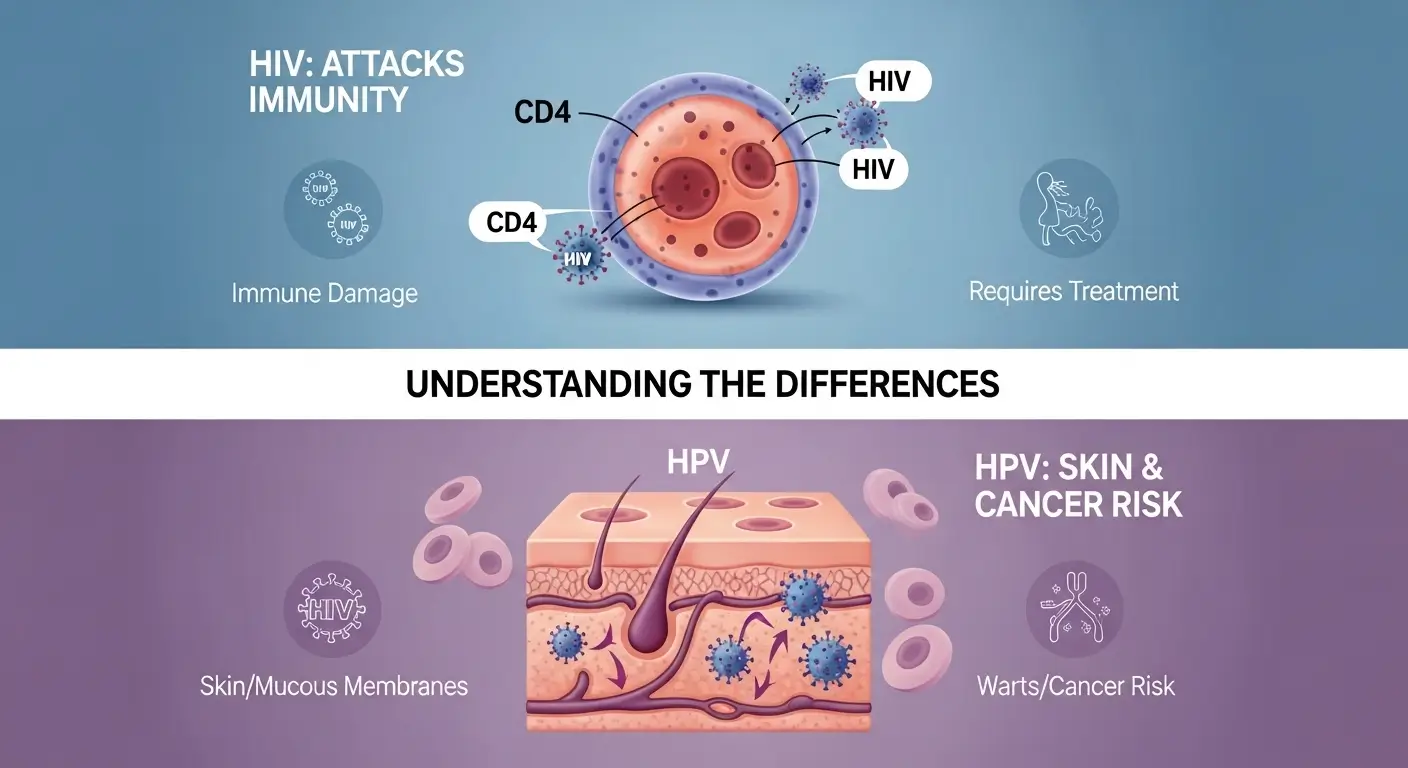
The primary difference between HIV and HPV lies in how they affect the human body. HIV attacks the immune system and weakens the body’s ability to fight infections, whereas HPV affects the skin and can cause warts or, in some cases, cancer.
Why Knowing Their Difference Is Important in Society
Understanding the difference between HIV and HPV is crucial for both learners and professionals. Misunderstanding these diseases can lead to stigma, fear, and delayed treatment. HIV is often associated with lifelong medical management, while many HPV infections clear naturally.
When people know the difference, they are more likely to get vaccinated, tested, and treated properly. Awareness also helps reduce discrimination and supports informed health education in schools and communities.
Difference Between HIV and HPV
1. Type of Virus
HIV: A retrovirus that attacks immune cells.
HPV: A DNA virus affecting skin and mucous membranes.
Examples:
- HIV destroys CD4 cells, weakening immunity.
- HPV causes visible warts on skin or genitals.
2. Main Target in the Body
HIV: Immune system.
HPV: Skin and reproductive organs.
Examples:
- HIV leads to opportunistic infections.
- HPV may cause cervical cancer in women.
3. Transmission Method
HIV: Spread through blood, semen, vaginal fluids, and breast milk.
HPV: Spread through skin-to-skin sexual contact.
Examples:
- Sharing contaminated needles spreads HIV.
- HPV can spread even without penetration during intimate contact.
4. Symptoms
HIV: Often silent initially, later causes flu-like symptoms and immune damage.
HPV: Often symptomless but may cause warts.
Examples:
- HIV may cause persistent fever and fatigue.
- HPV may cause genital warts or throat lesions.
5. Long-Term Effects
HIV: Can progress to AIDS if untreated.
HPV: Can lead to certain cancers.
Examples:
- HIV without treatment results in severe immune failure.
- HPV may cause cervical or throat cancer years later.
6. Curability
HIV: No cure, but manageable with lifelong treatment.
HPV: Many infections clear naturally.
Examples:
- HIV patients require antiretroviral therapy.
- HPV warts may disappear without treatment.
7. Prevention
HIV: Prevented through safe sex, sterile needles, and medication.
HPV: Prevented mainly through vaccination and safe sex.
Examples:
- PrEP reduces HIV infection risk.
- HPV vaccine protects against cancer-causing strains.
8. Testing
HIV: Diagnosed through blood tests.
HPV: Detected through Pap smears and HPV tests.
Examples:
- HIV rapid tests provide results in minutes.
- HPV screening identifies cervical cell changes.
9. Social Perception
HIV: Often carries heavy stigma.
HPV: More common and less socially discussed.
Examples:
- HIV patients may face discrimination.
- HPV is often ignored despite being widespread.
10. Global Prevalence
HIV: Less common but more serious.
HPV: Extremely common worldwide.
Examples:
- Millions live with HIV globally.
- Most sexually active people will get HPV at some point.
Nature and Behaviour of Both Viruses
HIV behaves aggressively by entering immune cells and multiplying, gradually destroying the body’s defenses. It remains in the body for life once acquired.
HPV, on the other hand, behaves differently. Many strains stay on the surface of the skin and may disappear as the immune system clears them. However, high-risk strains can quietly cause cellular changes that may develop into cancer over time.
Why People Are Confused About Their Use
People confuse HIV and HPV mainly because:
- Both are sexually transmitted infections.
- Their names sound similar.
- Public health campaigns often mention them together.
This similarity in terminology leads many to assume they are the same disease, which is not true.
Table Showing Difference and Similarity
| Feature | HIV | HPV | Similarity |
| Virus Type | Retrovirus | DNA virus | Both are viruses |
| Transmission | Body fluids | Skin contact | Both spread through sexual activity |
| Symptoms | Immune failure | Warts/cancer risk | Both may be symptomless initially |
| Cure | No cure | Often clears | Both require medical monitoring |
| Prevention | Medication, condoms | Vaccine, condoms | Safe sex reduces risk |
Which Is Better in What Situation?
HIV Situation:
In terms of medical seriousness, HIV is more dangerous because it directly weakens the immune system. It requires lifelong treatment and careful monitoring. Therefore, early testing and prevention are especially critical for HIV exposure situations.
HPV Situation:
HPV is less life-threatening in most cases, but its cancer-causing strains make vaccination extremely important. In preventive health contexts, HPV awareness is more about long-term cancer prevention than immediate illness.
Use of HIV and HPV in Metaphors and Similes
- “Corruption spread through the system like HIV attacking immunity.”
- “The rumor spread like HPV quiet, invisible, but everywhere.”
These metaphors highlight invisibility and silent damage.
Connotative Meaning
| Term | Connotation | Example |
| HIV | Negative | “The policy became an HIV to the economy.” |
| HPV | Neutral to negative | “The problem lingered like HPV in society.” |
Idioms or Proverbs Related
There are no direct idioms for HIV or HPV, but related expressions include:
- “Prevention is better than cure.”
Example: Vaccination against HPV shows that prevention is better than cure.
Works in Literature
- At Risk – Novel, Alice Hoffman, 1988
- And the Band Played On – Nonfiction, Randy Shilts, 1987
Movies Based on HIV
- The Normal Heart – Drama, 2014, USA
- A Closer Walk – Documentary, 2003, Australia
- Fig Trees – Documentary, 2009, Canada
Frequently Asked Questions
1. Can a person have both HIV and HPV?
Yes, and people with HIV are more likely to develop severe HPV symptoms.
2. Is HPV more common than HIV?
Yes, HPV is one of the most common sexually transmitted infections worldwide.
3. Can condoms prevent both viruses?
They reduce risk but do not fully prevent HPV due to skin contact.
4. Is there a vaccine for HIV?
No vaccine exists yet, but HPV vaccines are widely available.
5. Does HPV always cause cancer?
No, only certain high-risk strains can lead to cancer.
How Both Are Useful for Surroundings
Though harmful, studying HIV and HPV has helped scientists develop vaccines, antiviral drugs, and better public health systems. Research on these viruses has advanced knowledge about immunity, cancer, and disease prevention.
Final Words for Both Terms
HIV represents a chronic immune disease that requires lifelong management, while HPV represents a widespread viral infection that often goes unnoticed but carries cancer risks. Both demand awareness, prevention, and early detection.
Conclusion
Understanding the difference between HIV and HPV is vital in modern health education. Although both are sexually transmitted viruses, they differ in structure, behavior, symptoms, and long-term effects. HIV weakens the immune system and requires lifelong treatment, while HPV mainly affects skin and can lead to cancer in some cases.
Confusion between these terms can lead to fear, stigma, and poor health decisions. By learning their differences, individuals can take preventive measures such as safe sex practices, vaccination, and regular medical testing. Public awareness not only protects individuals but also strengthens society’s overall health and reduces misinformation surrounding these infections.

Daniel Carter is a research writer and comparison specialist at Compadiff. He focuses on breaking down complex topics into simple explanations so readers can clearly understand the differences between similar concepts, products, and ideas.